Amazon Fresh Cuts Prices on Thousands of Items, and That Says a Lot About Amazon’s Grocery Strategy
Salevoyant Editorial · September 14, 2026
Introduction
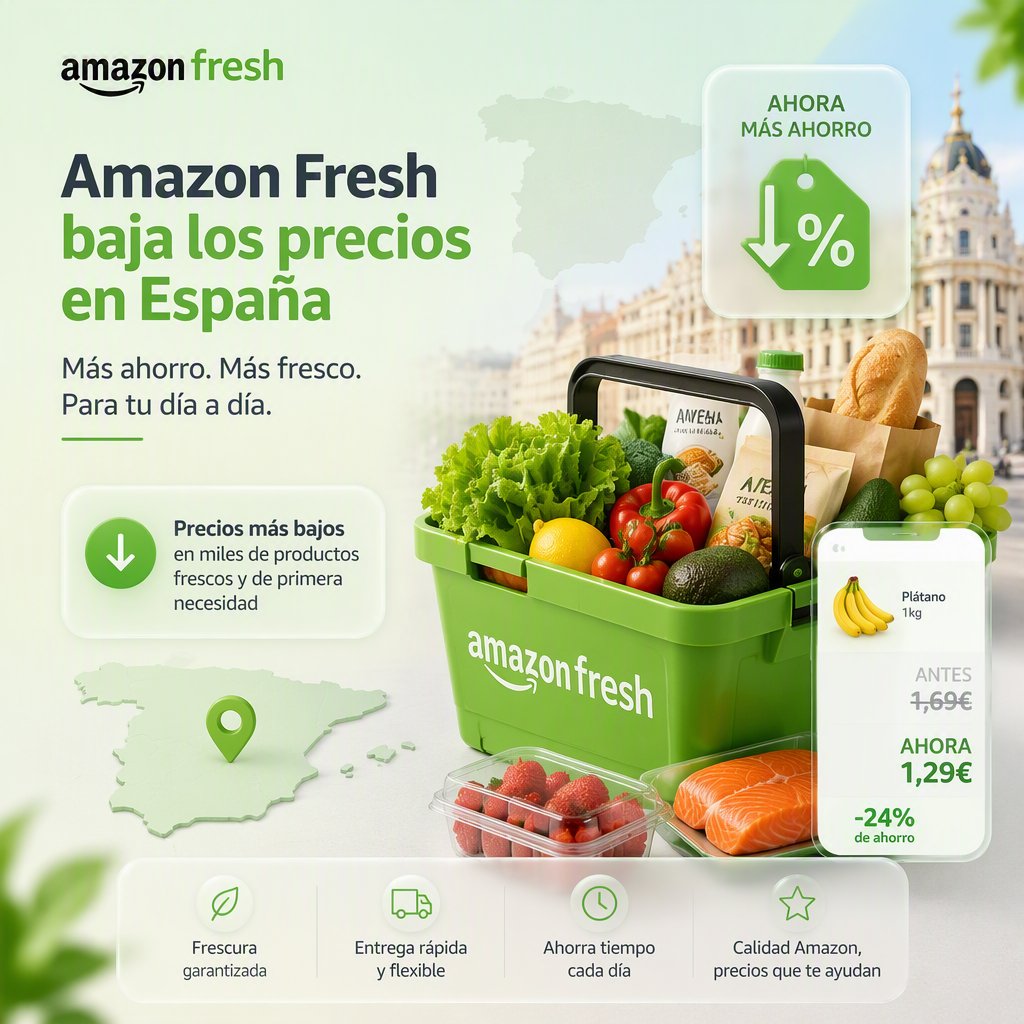
Amazon Fresh has lowered prices on thousands of products in Spain right as households are rebalancing budgets for the back-to-routine season. That sounds like a straightforward retail promo, but it’s actually a useful signal about where Amazon thinks grocery, delivery, and basket economics are heading.
For sellers, vendors, and marketplace operators, this move matters because grocery is one of the hardest categories to scale profitably. It’s low margin, operationally complex, and heavily shaped by frequency, trust, and convenience. When Amazon changes pricing across fresh, pantry, and household essentials, it’s not just trying to sell more apples and pasta. It’s refining how its entire retail stack behaves.
Core Development
Amazon Fresh in Spain is cutting prices across a wide range of items, including fresh produce, frozen foods, pantry staples, cleaning supplies, personal care, pet products, and home essentials. According to Amazon, some categories are seeing notable reductions, such as more than 25% on fruits and vegetables, more than 15% on fresh fish, more than 10% on meat and chicken, and more than 10% on beverages. Amazon says the average saving on the weekly basket is around 10%.
The timing is intentional. September is when many households reset routines, restock kitchens, and return to more structured weekly purchasing. In Amazon’s own framing, the goal is to make that seasonal shift feel less expensive and more predictable.
That’s important because grocery isn’t just another assortment on Amazon. It’s a high-frequency use case that helps anchor customer loyalty. If shoppers start their weekly food order in Amazon Fresh, they’re more likely to buy household staples, then add in complementary items from the broader Amazon catalog. That creates a recurring basket, which is exactly what Amazon wants.
The service is available in cities like Madrid, Barcelona, Valencia, Seville, Zaragoza, and Guadalajara, plus surrounding areas. Customers can order via Amazon’s website or app, choose delivery windows of two hours, and receive same-day delivery depending on availability. They can also schedule orders in advance.
That combination of price cuts and flexible fulfillment is the real story.
Technical Deep Dive
At a platform level, Amazon Fresh works as a hybrid grocery fulfillment system. It combines catalog merchandising, availability by postal code, dynamic delivery slot management, and a fast-replenishment order flow. Unlike standard marketplace shopping, grocery depends on precise inventory freshness and tight logistics control.
A few technical points stand out.
1.
Basket pricing is doing more work than single-item pricing
When Amazon says it has reduced prices on thousands of items, the goal isn’t simply to win on isolated SKUs. It’s to influence basket composition. Grocery shoppers rarely buy one item at a time. They buy a weekly mix of perishables, shelf-stable products, and household essentials.
That means Amazon can engineer better perceived value by adjusting prices across complementary products. Lower produce prices pull shoppers in. Competitive pricing on meat, fish, and drinks helps expand the basket. Household and cleaning items raise order value. The system is designed to optimize for average order value, repeat visits, and retention.
2.
Availability by ZIP code is a logistics gate, not just a storefront filter
The service checks whether Fresh is available in a customer’s postal code and shows delivery costs and minimum order thresholds. That sounds simple, but under the hood it’s a capacity and inventory matching problem.
Amazon has to balance:
- Cold-chain inventory
- Perishable shelf life
- Last-mile delivery density
- Delivery slot availability
- Minimum order economics
If a zone has too much demand and not enough same-day capacity, the system must constrain the experience. That’s why grocery on Amazon often feels more local and more variable than standard retail. It’s not a global catalog. It’s a fulfillment-aware storefront.
3.
Scheduled delivery windows are part of the UX and the economics
The two-hour delivery window matters because it reduces uncertainty for customers while helping Amazon batch route planning. In grocery, route density is everything. The more tightly Amazon can cluster orders by geography and time, the lower the delivery cost per basket.
Same-day delivery, when offered, is a premium operational promise. It requires stronger inventory positioning and tighter dispatch control. Scheduled delivery, by contrast, gives Amazon more room to optimize route planning and labor utilization.
4.
Reorder logic is quietly one of the strongest retention tools
Amazon says it stores previous purchases in the customer account and suggests items based on purchase history. That’s a basic-sounding feature, but it’s one of the most effective mechanisms in grocery commerce.
The logic behind reorder and history-based recommendations is straightforward:
- reduce search time
- reduce decision fatigue
- increase repeat basket frequency
- improve conversion on habitual items
For a category like grocery, where many purchases are recurring, these features have outsized impact. A customer who can reorder detergent, milk, cereal, and pet food in a few clicks is much less likely to shop elsewhere.
5.
Alexa+ adds another interface layer
Amazon also points to Alexa+ in Early Access, where customers can use voice to ask for recipe suggestions, adjust ingredient quantities, substitute items, and add missing products to a shopping list.
That’s not just a convenience feature. It’s a test of multimodal commerce. Amazon is connecting conversational AI, recipe planning, and shopping actions into one workflow. If it works well, it reduces friction at exactly the moment a customer is deciding what to buy.
The strategic value here isn’t voice alone. It’s the way Amazon is tying planning, purchasing, and replenishment into one system.
Industry Impact
This move has implications that go beyond Spanish grocery shoppers.
For Amazon sellers, especially those in consumables, household goods, and private label-adjacent categories, this is another reminder that Amazon is treating grocery like a frequency engine. Brands that want visibility in Fresh need to think about price elasticity, pack architecture, and repeat purchase behavior, not just gross margin on a single listing.
For Vendor Central users, the pressure is even more direct. Grocery and essentials categories are where Amazon’s negotiated pricing power tends to show up fastest. If Amazon wants a sharper price position, it can push for better terms, promotional support, or more aggressive vendor funding. Vendors in categories such as beverages, baby care, and cleaning products should expect tighter scrutiny on trade terms and promo ROI.
For marketplace participants, the broader lesson is that Amazon’s grocery ambitions are increasingly tied to its own retail operations, not just third-party assortment. The press release notes that more than 17,000 Spanish SMEs sell on Amazon and that more than 60% of items sold come from third-party sellers. That’s a reminder that the marketplace is still central to Amazon’s ecosystem, but in Fresh, Amazon retains more control over pricing, assortment, and delivery experience.
That hybrid model creates tension. Amazon wants marketplace scale, but it also wants category-level consistency. In grocery, consistency often beats breadth.
Implementation Considerations
If you’re a seller, vendor, or operator watching this space, there are a few practical takeaways.
For sellers
- Watch price elasticity closely. Grocery shoppers are sensitive to small price movements, especially on staples.
- Optimize for repeatability. Products with natural replenishment cycles tend to perform better in Fresh-like environments.
- Pay attention to pack sizes. Multipacks and family formats often play better in delivery-based grocery than single units.
- Review content quality. Clear titles, ingredient data, dietary attributes, and rich images matter more when shoppers are trying to build a basket quickly.
For vendors
- Prepare for tighter promo planning. Amazon’s pricing moves often create knock-on effects in vendor negotiations.
- Model true margin after logistics and funding. Grocery economics can look healthy on paper and weak after allowances, rebates, and delivery costs.
- Expect algorithmic repricing pressure. When Amazon refreshes category pricing, competitors may need faster response times to avoid losing share.
For developers and retail tech teams
- Treat availability as a real-time system. Grocery depends on inventory freshness, slot capacity, and location-based eligibility.
- Focus on reorder UX. Features that surface previous purchases and recurring items can materially lift conversion.
- Design for low-friction checkout paths. Grocery users don’t want to hunt. They want speed, confidence, and clear substitution logic.
- Plan for AI-assisted shopping flows. Tools like Alexa+ suggest that product data should be structured enough for conversational interfaces, not just search filters.
Future Outlook
This price cut likely isn’t a one-off seasonal tactic. It looks more like a signal that Amazon Fresh is becoming a more deliberate part of Amazon’s retail machine, especially in markets where household budgeting is under pressure.
Expect three likely trends to continue:
-
More aggressive basket pricing Amazon will keep using category-wide adjustments to shape value perception, not just isolated promotions.
-
Tighter integration between grocery and AI Alexa-driven shopping and recommendation systems will probably get better at turning routine meal planning into purchase events.
-
More emphasis on frequency over one-time conversion Grocery is sticky when it works. Amazon knows that. The company seems focused on making Fresh a habitual weekly habit, not a niche service.
For the broader ecommerce sector, that means grocery remains one of the clearest examples of how Amazon blends pricing, logistics, and software into one operating model. It’s not just about selling food online. It’s about building a system where convenience, replenishment, and savings reinforce each other.
Conclusion
Amazon Fresh’s price reductions in Spain are more than a seasonal promotion. They show how Amazon uses grocery to sharpen customer loyalty, test delivery economics, and keep its retail ecosystem moving.
For sellers and vendors, the message is clear. Grocery is still a strategic battleground, and pricing decisions in this category can ripple into negotiation strategy, traffic patterns, and repeat purchase behavior. For tech teams, the takeaway is just as practical: the future of grocery commerce depends on fast inventory logic, smart reorder tools, and interfaces that make repeat buying feel effortless.
If you’re watching Amazon’s marketplace strategy, keep an eye on Fresh. It often reveals where the company is headed next.