Amazon Marketplace in India Faces License Suspensions Over Datura Listings
Salevoyant Editorial · August 26, 2026
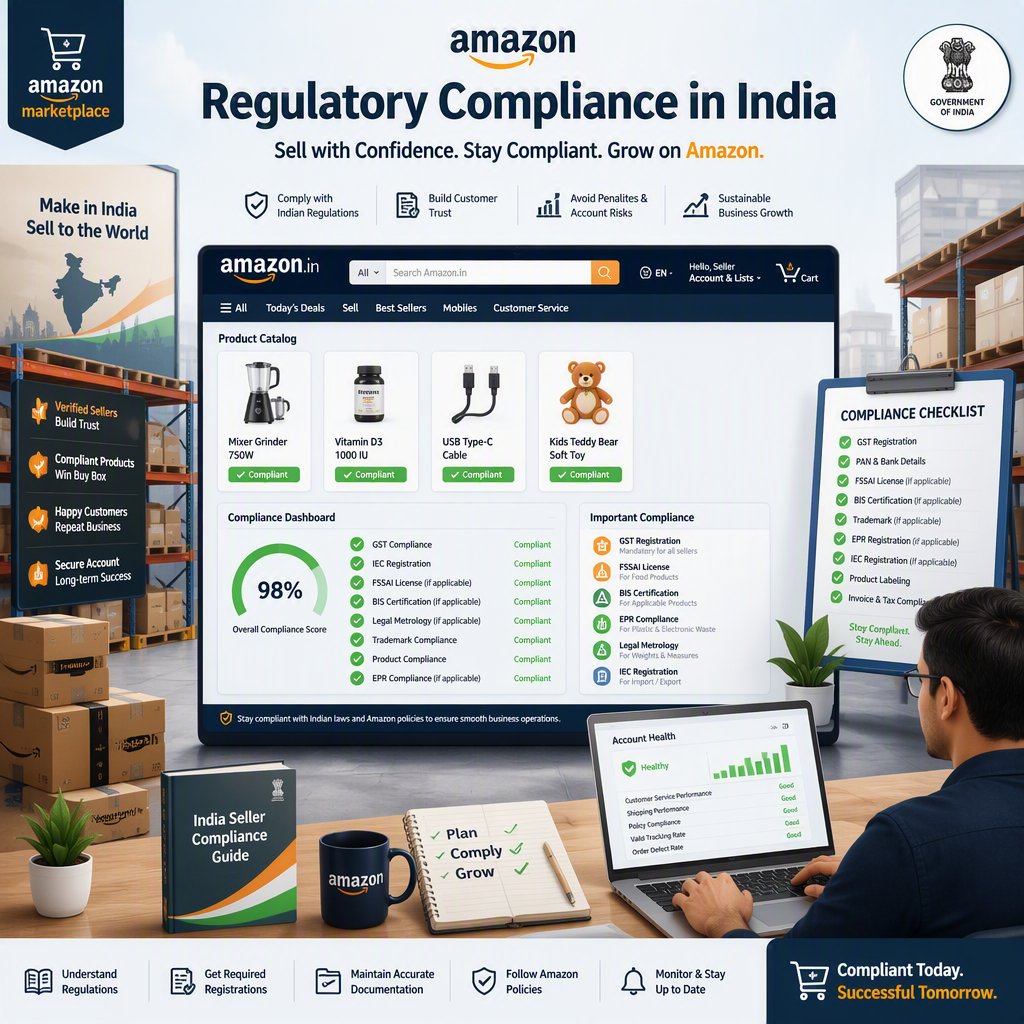
Introduction
Amazon’s latest regulatory headache in India isn’t about delivery speed, Prime retention, or ad pricing. It’s about whether a marketplace can keep unsafe products off its shelves, especially when those products are being listed as food. That matters right now because regulators are paying closer attention to what appears in third-party catalogs, and the consequences are getting real.
For Amazon sellers, vendors, and marketplace operators, this isn’t a niche compliance story. It’s a warning shot about catalog governance, automated listing controls, and the growing expectation that platforms police dangerous content before it reaches consumers.
Core Development
Karnataka’s Food Safety and Drugs Administration Department has suspended the food licences of Amazon, Swiggy Instamart, and BigBasket until further orders after finding datura fruits and seeds listed on those platforms as food products. The department also ordered the companies to remove the listings, pull related advertisements, and stop any sale or distribution of datura for human consumption.
That’s the key point. This wasn’t a labeling dispute over a packaged snack or an ingredient disclosure issue. Authorities said a toxic plant, also known as dhatura or thorn apple, was being offered as food. Datura is part of the nightshade family and can be extremely dangerous if consumed without specialized processing. Officials warned that it can lead to serious poisoning, coma, and even death.
The regulatory response was swift and broad. Instead of targeting a single listing or seller account, the department suspended food licences for the platforms themselves. That tells us regulators are no longer treating marketplace exposure as a passive issue. If the platform is the distribution layer, the platform can also inherit the compliance burden.
For Amazon, this lands in a particularly sensitive area. The company has spent years building out stricter product safety, restricted ASIN controls, and automated catalog moderation. Still, the presence of toxic botanical material in a food context shows how gaps can persist when catalog ingestion is too open or when sellers misuse search terms, keywords, or product categories.
Technical Deep Dive
This incident sits at the intersection of catalog integrity, restricted product enforcement, and regulated goods compliance. On a marketplace like Amazon, the system usually relies on a mix of machine enforcement and human review.
At a high level, the process looks like this:
- A seller submits a listing through a feed, flat file, API, or Seller Central form.
- Amazon’s catalog systems classify the item using title, bullets, attributes, images, and backend search terms.
- Automated checks compare the submission against policy rules, restricted product lists, and category-specific standards.
- If the item passes, it goes live. If not, it gets suppressed, flagged, or routed for review.
In theory, a toxic plant marketed as food should be stopped at multiple points. But in practice, enforcement gets messy when a product can be described in ways that evade filters. Sellers may list a harmful item using vague wording, alternate names, or misleading health-oriented language. Search indexing can also amplify the problem if the item appears in food-related queries or recommendation surfaces.
The core technical challenge is that Amazon and similar platforms operate at massive scale. Millions of SKUs move through ingestion pipelines, and even a small gap in taxonomy controls can create a serious compliance exposure. If a system depends too heavily on keyword matching, it can miss product aliases. If it depends too heavily on seller-provided attributes, bad actors can game the fields. If human review is too slow, the item may already be discoverable and purchasable before it’s caught.
This is where policy-as-code and stronger risk scoring matter. A mature moderation stack would typically combine:
- Category-level rules for food, supplements, botanicals, and hazardous items
- Entity recognition to detect plant names, synonyms, and toxic ingredient references
- Image analysis to identify suspicious packaging or natural product cues
- Behavioral signals such as repeated relisting, policy violations, and high-risk seller histories
- Regional compliance rules tied to local law and state-level restrictions
The real problem isn’t just whether a bad listing can go live. It’s how quickly the system can detect it, suppress it, and stop it from being replicated across variants, duplicate ASINs, or seller accounts.
There’s also a catalog maintenance angle. On large marketplaces, a single item can spawn multiple offers, listing variations, and translated or localized versions. If a toxic item gets indexed under multiple food-related terms, the removal workflow has to clean up the ASIN, linked offers, ads, and any cached surfaces. That includes search results, recommendation widgets, and potentially external ads synced through marketplace feeds.
For Amazon, this type of enforcement isn’t just a trust-and-safety issue. It’s a systems issue. The company needs classification accuracy, fast takedown propagation, and good audit trails. Without those, the cost of remediation grows fast.
Industry Impact
This case matters far beyond Karnataka. It highlights a trend that’s visible across global marketplaces: regulators want platforms to behave less like neutral hosts and more like accountable commerce operators.
For Amazon, the implications are wide:
- Seller Central enforcement will likely tighten, especially for food, health, herbal, and supplement categories.
- Vendor Central teams may face more compliance checks on imported or locally sourced food items, including documentation and ingredient validation.
- Marketplace ad inventory could face tighter moderation, since the order explicitly mentions advertisements, not just listings.
- Risk scoring for catalog submissions may get more aggressive, which can slow onboarding but reduce regulatory exposure.
This also affects legitimate sellers. When a high-profile safety case hits, Amazon often responds by broadening controls in adjacent categories. That can mean extra document requests, slower listing approvals, listing suppressions, or stricter keyword filters for products that are technically allowed. Sellers in herbal goods, Ayurvedic products, dietary supplements, and natural foods should expect more scrutiny, not less.
There’s a business trade-off here. Tighter moderation raises compliance costs, but it also protects conversion rates over time. Shoppers won’t keep buying from a marketplace they associate with unsafe products. In that sense, content moderation is not just a legal function. It’s a revenue-protection system.
For Amazon’s retail media and ad ecosystem, the stakes are even higher. If a questionable product gets promoted through sponsored placements, the brand damage spreads faster. Ad systems have to be synced with catalog safety controls, otherwise advertisers can pay to amplify a listing that should never have been live in the first place.
Implementation Considerations
Sellers, vendors, and developers working with Amazon catalogs should treat this as a practical compliance signal, not just a news item.
Here’s what matters operationally:
-
Review product taxonomy carefully
-
Make sure food, supplement, botanical, and medicinal products are classified correctly.
-
Don’t force-fit high-risk items into cleaner categories to improve discoverability.
-
Audit titles, bullets, and backend search terms
-
Hidden keywords can trigger enforcement if they imply unsafe use.
-
Avoid alternate names that could misrepresent an item’s intended consumption.
-
Validate ingredient and safety documentation
-
Food and health-adjacent products need clear documentation, especially in regulated markets.
-
Keep certificates, lab reports, and compliance records ready for review.
-
Monitor account health and suppression trends
-
Repeated listing rejections in one category often predict broader enforcement.
-
Watch for patterns in Seller Central performance notifications and compliance warnings.
-
Prepare for faster takedown workflows
-
If you run a catalog or feed integration, build rapid removal capability into your internal tools.
-
Don’t rely on manual edits only. API-driven catalog changes need rollback options.
-
Separate allowed products from regulated goods
-
A mixed catalog increases risk.
-
If your portfolio includes food, supplements, or herbal products, segment them operationally and assign clear review ownership.
For developers integrating with Amazon systems, this is also a reminder to build better validation at the point of ingestion. Catch obvious compliance issues before a feed hits the marketplace. That means pre-submission checks, approved keyword lists, and category-specific rule engines.
For vendors, the lesson is simpler. Don’t assume retail-managed programs shield you from catalog risk. If a product is unsafe or misclassified, it can still create operational and reputational fallout across the whole supply chain.
Future Outlook
Expect more of these enforcement actions, not fewer. Marketplace regulators are getting more comfortable treating digital shelves like physical ones. If a product would be illegal or unsafe in a store, they increasingly expect the same standard online.
Amazon will probably respond by expanding its automated compliance stack in India and other high-risk markets. That could include stronger natural language detection, better category gating, and more regional policy logic tied to local food safety rules. It may also mean tighter controls around botanical products, especially those with medicinal or toxic properties.
There’s another likely outcome too. Platforms may move toward earlier intervention in the listing lifecycle. Instead of waiting until a product is live and reported, systems may block more items at the ingestion stage. That’s better for safety, but it can create friction for legitimate sellers. False positives will rise unless Amazon improves classification precision.
Long term, this is part of a broader marketplace maturity pattern. Amazon and its peers are being pushed to prove they can govern their own catalogs at scale. That means more compliance automation, more document review, and more regional policy tailoring. It’s not glamorous work, but it’s becoming central to marketplace economics.
Conclusion
This Karnataka suspension is about more than one toxic listing. It shows how quickly a marketplace compliance failure can escalate into a licensing issue, and how closely regulators are watching online catalog quality.
For Amazon sellers and vendors, the takeaway is straightforward:
- treat catalog accuracy as a compliance function
- expect tighter enforcement in food and health categories
- build internal review steps before listings go live
- keep documentation ready for audits and takedowns
The businesses that adapt fastest will spend less time fighting suppressions and more time protecting revenue. On Amazon, that’s becoming harder to separate from product safety itself.