Amazon Prime Video Adds STARZ and Crunchyroll Bundle: What to Know
Salevoyant Editorial · July 29, 2026
Introduction
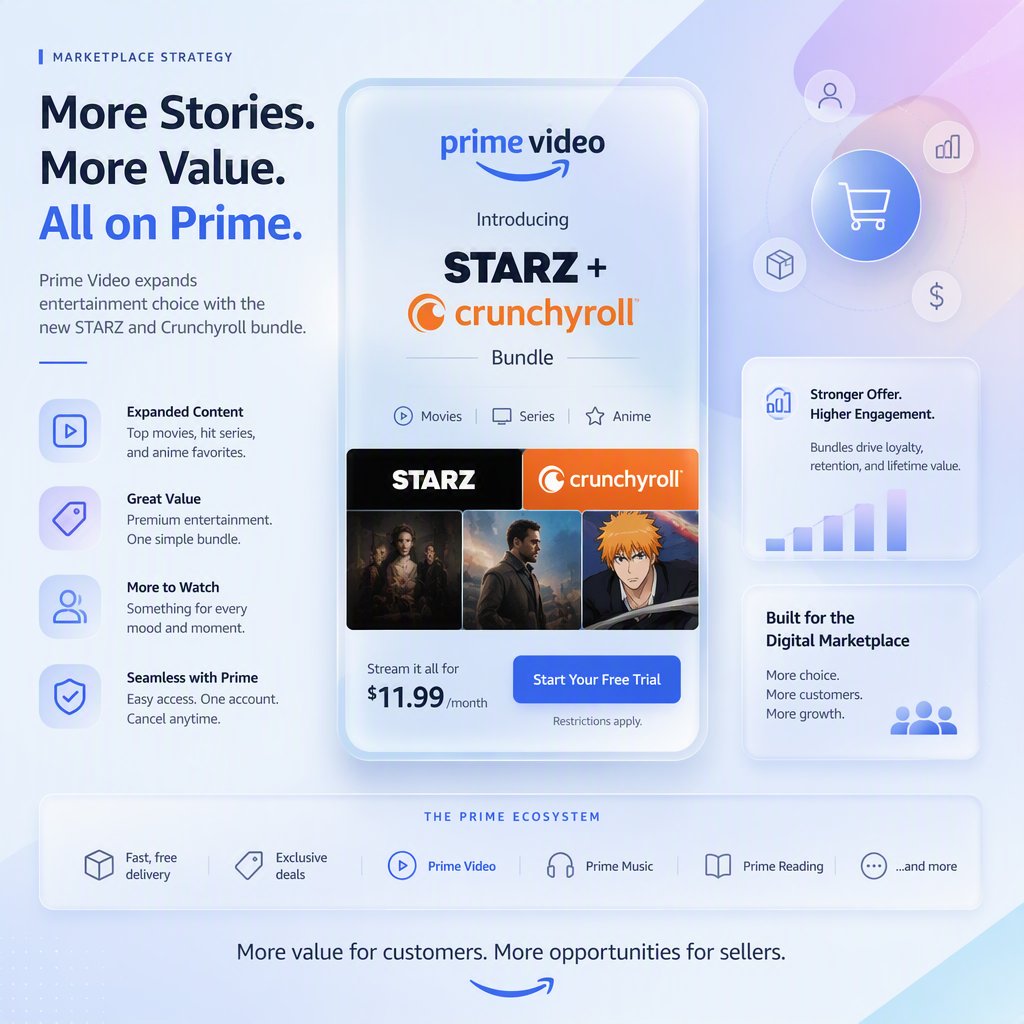
Amazon just added another layered subscription bundle inside Prime Video, this time combining STARZ and Crunchyroll for
Salevoyant Editorial · July 29, 2026
Amazon just added another layered subscription bundle inside Prime Video, this time combining STARZ and Crunchyroll for
That matters for sellers, vendors, developers, and anyone watching Amazon’s platform strategy. The more Amazon becomes a distribution hub for third-party digital services, the more its commerce, identity, billing, discovery, and recommendation systems start shaping how media subscriptions are sold and consumed.
Amazon announced that new U.S. customers can now buy a STARZ + Crunchyroll bundle through Prime Video. The package costs 6.99 monthly, which Amazon says is a savings of more than 23% versus subscribing separately.
The timing is important. The bundle arrives alongside a slate of new and returning programming from both services, including STARZ titles like:
On the anime side, Crunchyroll is using the bundle to push both evergreen library value and new-season momentum, with titles such as:
And for August 2026, Crunchyroll is highlighting newer programming like BLACK TORCH, Jaadugar: A Witch in Mongolia, Mushoku Tensei: Jobless Reincarnation Season 3, Smoking Behind the Supermarket with You, and ONE PIECE HEROINES.
The real story here isn’t just “more content.” It’s Amazon turning Prime Video into a high-friction reducer, where customers can browse, subscribe, and manage multiple premium services in one interface.
For Amazon, that’s a powerful position. It keeps customers inside the Amazon ecosystem longer and gives Prime Video more use as a subscription distribution layer.
This bundle works because Prime Video already operates as a subscription aggregation platform. Amazon has spent years building the plumbing for add-on video subscriptions, and the STARZ + Crunchyroll launch sits on top of that infrastructure.
At a technical level, several systems have to line up cleanly:
Unified identity and entitlement management
A Prime Video customer doesn’t need a separate app flow just to buy the bundle. Amazon handles:
That means once a user purchases the bundle, Prime Video has to map access rights to two separate content providers. This is classic entitlement orchestration. The platform must know not just who paid, but which catalog segments are available, on which devices, and under what licensing terms.
Catalog normalization and metadata stitching
STARZ and Crunchyroll have very different content structures. STARZ leans into premium scripted series and films. Crunchyroll brings a much broader anime catalog with simulcasts, franchises, seasonal releases, and legacy titles.
To present both services inside one shopping and viewing experience, Amazon needs to normalize:
That isn’t trivial. If metadata is inconsistent, search results get messy, recommendations go stale, and customer support cases rise. At Amazon’s scale, metadata quality is a performance issue, not just a catalog issue.
Billing and subscription lifecycle handling
Bundles add complexity to renewals, cancellations, upgrades, and refunds. The platform has to decide how to treat:
A well-designed channel bundle reduces friction for the customer but raises back-end policy questions. For example, if a customer cancels the bundle, do they lose both services immediately or at period end? What happens if one partner changes pricing later? Amazon needs clean rules across the subscription lifecycle, and those rules must be consistent in Prime Video, Amazon account management, and customer service surfaces.
Discovery and recommendation logic
The bundle’s success depends on recommendations. Amazon has strong personalization systems, and Prime Video already uses watch behavior to rank content. With two services in one package, Amazon can feed combined engagement signals into its models.
That creates a few interesting effects:
This is where Amazon’s machine learning stack really matters. The interface is only part of the equation. The ranking models, watch-next queues, and homepage placement decide whether the bundle feels valuable or invisible.
For the broader Amazon ecosystem, this is another example of Prime Video acting like a digital channel marketplace. That has implications far beyond entertainment.
At first glance, this has nothing to do with Seller Central or Vendor Central. But the same strategic pattern shows up everywhere on Amazon: aggregate demand, lower switching costs, and keep the transaction inside Amazon’s rails.
That matters because Amazon has proven it can package access to third-party offerings in a way that:
Sellers should pay attention because Amazon tends to apply proven platform patterns across categories. Whether it’s streaming, grocery, or marketplace subscriptions, Amazon likes structures that make it easier for customers to buy more without leaving the ecosystem.
The bundle also reflects how Amazon thinks about channel partnerships. STARZ and Crunchyroll gain distribution, but Amazon gains another reason for customers to keep paying for Prime or using Prime Video.
That’s the same dynamic many vendors face in retail media, wholesale negotiations, and content syndication. Amazon provides reach, but it also owns the customer interface. The partner gets exposure, while Amazon controls discovery, transaction flow, and often the reporting layer.
This reinforces Amazon’s role as an aggregator of aggregators. It doesn’t just sell products or host media. It intermediates access to other businesses.
That model is attractive because it scales. Amazon can add more bundles without rebuilding the customer journey from scratch. Each new service expands the catalog, deepens engagement, and makes the platform harder to leave.
If you work in Amazon tech, retail media, content operations, or subscription commerce, there are some practical lessons here.
Pay close attention to how bundle logic affects system design:
If these systems drift, customers see broken access, duplicate charges, or inconsistent content availability. That’s bad for churn, and churn is expensive in subscription businesses.
Bundled offerings complicate attribution. You’ll need to separate:
Without clean reporting, it’s hard to know whether the bundle is driving incremental subscribers or just cannibalizing standalone plans.
The takeaways are more strategic, but they still matter:
That’s especially relevant for brands selling digital accessories, fandom merchandise, media-adjacent products, and collectibles tied to anime or premium TV franchises. If Amazon is helping users discover content more efficiently, it can also influence what they buy next.
This bundle looks like another step toward a more modular Prime Video strategy. Amazon doesn’t need every customer to subscribe to every service. It needs enough of them to subscribe to the right combinations.
Expect more of this.
We’ll likely see additional bundles that pair complementary audiences, content libraries, or price points. Amazon has strong incentives to keep expanding its add-on ecosystem because each new bundle increases:
The bigger question is whether Amazon eventually turns Prime Video into a more formal subscription marketplace with smarter bundle personalization. Imagine offers tailored by watch history, device behavior, or household profile. That would fit Amazon’s existing strengths very well.
There’s also a competitive angle. Streaming services need efficient distribution, and Amazon offers that at scale. But every bundle also tightens Amazon’s grip on the customer relationship. Partners gain reach, but Amazon gains control over discovery, billing, and retention.
The STARZ and Crunchyroll bundle isn’t just another entertainment promo. It’s a look at how Amazon keeps turning Prime Video into a high-value distribution layer for third-party subscriptions.
For Amazon professionals, the lesson is pretty clear:
If you’re in Seller Central, Vendor Central, or any Amazon-adjacent business, this is worth watching closely. Amazon keeps proving it can apply the same platform logic across categories. Today it’s anime and premium drama. Tomorrow it could be something else entirely.