Amazon Prime Video grabs Srinivasa Mangapuram OTT rights: What to know
Salevoyant Editorial · July 31, 2026
Introduction
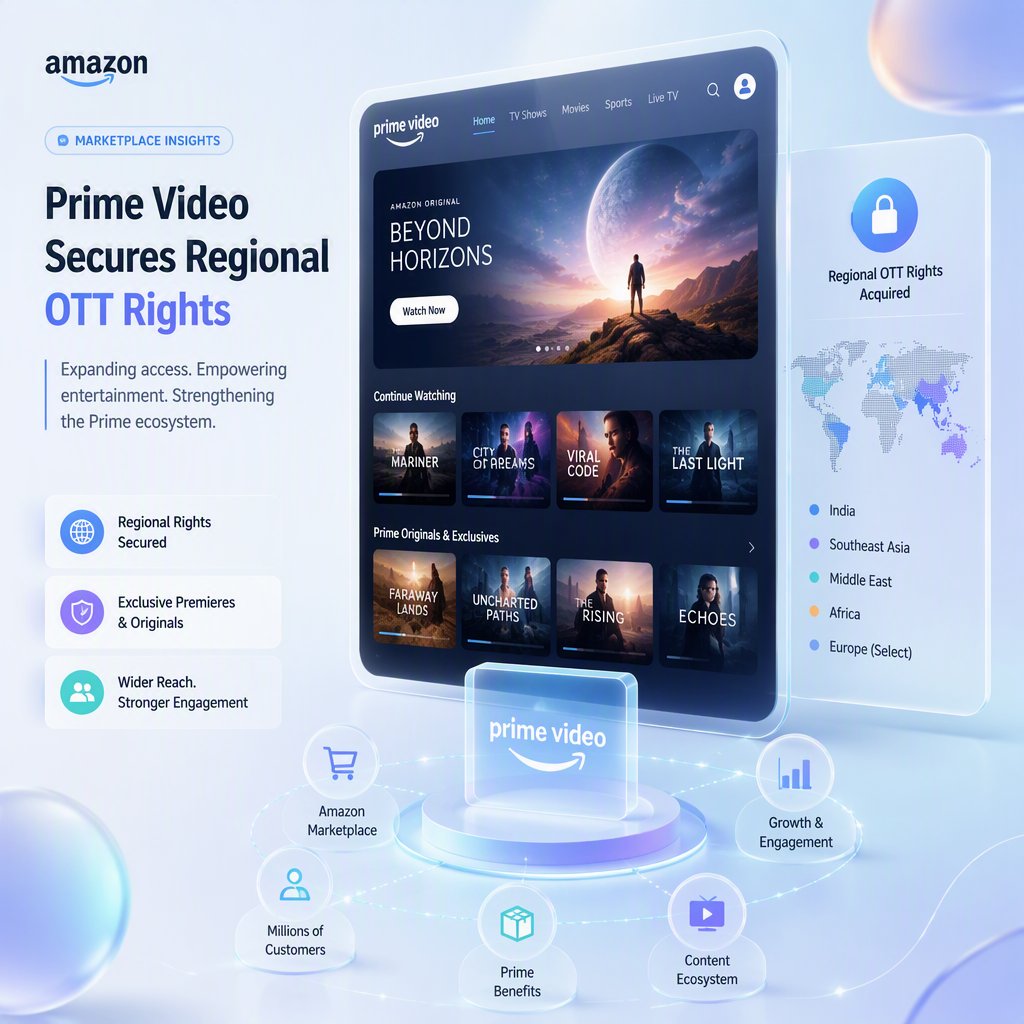
Amazon has secured the post-theatrical streaming rights for the Telugu film Srinivasa Mangapuram, giving Prime Video another title in its regional-content pipeline. The exact OTT release date hasn’t been announced yet, but the deal itself matters because it shows how Amazon continues to use film acquisition as a content and retention strategy, not just a catalog expansion tactic.
For sellers, vendors, and marketplace operators, this kind of announcement is worth watching. It reflects how Amazon keeps building ecosystem value across entertainment, subscription membership, and consumer engagement, all of which feed back into the company’s broader commerce engine.
Core Development
Srinivasa Mangapuram released in theaters on July 30 and will stream on Amazon Prime Video after its cinema run ends. The film is a Telugu romantic action drama directed by Ajay Bhupathi, and it’s drawing attention for two debuts: Jaya Krishna Ghattamaneni and Rasha Thadani.
The announcement of Amazon’s streaming partner on the same day as the theatrical release is the key detail here. It gives viewers certainty about the home viewing destination, even if the timing remains open. That’s a familiar play in today’s film distribution model. The theatrical window creates early visibility, while the streaming rights secure a second life for the title once box office momentum tapers off.
There’s also a broader strategic layer. Amazon isn’t just buying movies. It’s building a steady stream of localized, audience-specific content that can help keep Prime memberships sticky in markets where regional language entertainment drives discovery and retention.
The film also has a notable industry-family angle, with Jaya Krishna being the son of the late Ramesh Babu, grandson of Krishna, and nephew of Mahesh Babu. That gives the project added media attention, which in turn improves the value of the streaming rights package for Prime Video.
Technical Deep Dive
At a surface level, this looks like a standard post-theatrical OTT acquisition. Under the hood, it’s more interesting than that.
Amazon’s content acquisition workflow is tightly tied to rights management, windowing, metadata ingestion, and regional localization. A film like Srinivasa Mangapuram moves through multiple layers before it appears in Prime Video search and recommendation surfaces.
Here’s the simplified flow:
- Theatrical window closes or begins to taper
- Digital rights activate based on the license agreement
- Assets are delivered to Amazon’s content operations pipeline
- Metadata is normalized
- Subtitles, dubbing, and artwork variants are prepared
- The title is published to the Prime Video catalog
- Recommendation systems start surfacing it based on viewer behavior
That last step matters a lot. Prime Video doesn’t just host content. It uses a recommendation stack that weighs viewing history, regional preference, language choice, genre affinity, and engagement signals. For a Telugu film, that means the platform can target the title to viewers already consuming South Indian cinema, romance-driven plots, or debut-star content.
From a technical standpoint, there are a few practical implications:
- Catalog availability timing depends on deliverables and QC, not just the public announcement.
- Regional metadata quality affects discoverability. If the film’s language tags, genre labels, and cast associations are weak, the title can underperform even with strong rights.
- Subtitle and audio packaging influence audience reach. In India, a Telugu film with well-executed subtitles can travel far beyond its core language market.
- Streaming rights duration changes long-term economics. A shorter exclusive window can create urgency, while a longer license supports catalog depth.
Amazon’s streaming stack also benefits from the same kind of scale thinking that powers its retail systems. Content delivery needs to be fast, resilient, and geographically optimized. Prime Video relies on distributed infrastructure, content delivery networks, and adaptive bitrate streaming so playback stays stable across different connection speeds and device classes. That’s essential in markets where users switch between smartphones, smart TVs, and low-bandwidth home networks.
The real value of a title like this isn’t only the film itself. It’s how well Amazon can turn a one-time acquisition into repeated discovery across devices, regions, and viewer segments.
Industry Impact
This deal says a lot about how Amazon is positioning itself inside India’s entertainment economy.
First, it reinforces the importance of regional content. Telugu cinema has become a major driver of digital viewing, and platforms that ignore local-language demand lose relevance fast. Amazon has clearly understood that. By securing post-theatrical rights for films like this, it keeps its catalog responsive to regional trends rather than overly dependent on pan-Indian or Hindi-first content.
Second, it supports Prime as a bundle strategy, not just an ecommerce subscription. The entertainment layer helps make the membership feel more valuable. If a customer joins Prime for delivery perks, but stays because they’re watching regional films and series, Amazon improves retention without changing the core pricing model.
Third, this kind of content deal has indirect implications for the marketplace side of Amazon’s business:
- Higher Prime engagement can improve membership renewal rates
- More viewing data can sharpen cross-surface personalization
- Stronger brand affinity can support shoppable media experiments
- Entertainment-driven traffic can increase attention across the broader Amazon app ecosystem
For vendors and marketplace sellers, that doesn’t mean a Telugu film acquisition directly changes ACoS or Buy Box performance. But it does matter at the platform level. Amazon has spent years reducing the distance between content consumption and commerce. The more time users spend in Amazon’s ecosystem, the more opportunities Amazon has to surface offers, products, and services.
It also shows that Amazon continues to treat India as a content market where local relevance beats generic scale. That’s an important lesson for sellers too. Listings, creatives, and advertising strategies that perform well in one language or region often need serious adaptation before they work elsewhere.
Implementation Considerations
If you’re a seller, vendor, app developer, or media partner watching this from an Amazon business angle, there are a few takeaways worth paying attention to.
For sellers and vendors
- Content-driven traffic matters. Prime Video titles can create spikes in adjacent browsing behavior inside Amazon’s ecosystem, even if the connection isn’t direct or immediate.
- Regional audience behavior is changing fast. If your catalog serves Indian consumers, product detail pages, creatives, and A+ content should reflect local language and cultural context where possible.
- Brand collaborations may find new paths. Entertainment tie-ins, fandom-driven merchandising, and creator-led product discovery are all areas worth testing.
For digital partners and developers
- Make sure metadata is structured cleanly. Amazon’s content and commerce surfaces depend on classification signals.
- Expect stronger demand for multi-language UX, especially subtitles, dubbed content, and localized discovery.
- If you’re building around Amazon APIs or media workflows, watch for tighter integration between content discovery and shopping experiences. Amazon likes connected systems, and it usually expands them incrementally.
For media and commerce teams
- Measure how content performance affects downstream engagement.
- Track whether entertainment releases correlate with app opens, membership renewals, or shopping activity.
- Pay attention to timing. The gap between theatrical release and OTT launch can be a useful planning window for promotions, influencer activity, and audience retargeting.
A practical question to ask is this: how does a streaming acquisition fit into the larger customer lifetime value model? Amazon already thinks that way. If a title keeps someone inside Prime for another month or two, the economics can justify the deal even without massive standalone viewership numbers.
Future Outlook
Deals like this point to a future where Amazon becomes even more selective and data-driven about entertainment rights. The old model was simple: buy content, publish it, hope it pulls viewers. The newer model is more surgical.
Expect Amazon to keep focusing on:
- Regional language films and series
- Post-theatrical licensing with clear windowing
- Titles that support membership retention
- Catalog depth that strengthens recommendations
- Cross-device viewing experiences with better personalization
There’s also a likely shift toward more measurable outcomes. Studios and streaming partners want to know not just whether a film got watched, but how it influenced engagement across the broader platform. That means richer reporting, better audience segmentation, and tighter performance measurement around each content deal.
For the Amazon ecosystem, that creates both opportunity and pressure. Opportunity, because more content can deepen user loyalty. Pressure, because content buyers have to justify every licensing decision with real engagement metrics and strategic fit.
If Prime Video keeps building around local-language hits like Srinivasa Mangapuram, it should strengthen Amazon’s position in India’s competitive streaming market. The challenge is consistency. One acquisition doesn’t move a market. A disciplined run of well-chosen regional titles can.
Conclusion
Amazon’s decision to carry Srinivasa Mangapuram on Prime Video after its theatrical run is more than a routine streaming announcement. It’s another example of how Amazon uses entertainment rights to reinforce Prime, deepen regional relevance, and keep users inside its ecosystem longer.
For sellers and vendors, the lesson is indirect but important. Amazon’s commerce strategy is increasingly tied to content, engagement, and localized customer behavior. The more closely your business understands those signals, the better positioned you’ll be to adapt.
Keep an eye on three things: windowing strategy, regional audience targeting, and how Amazon connects media attention with platform retention. That’s where the real business story is.