Amazon Seller Central and Vendor Central: Premium Pricing Explained
Salevoyant Editorial · August 24, 2026
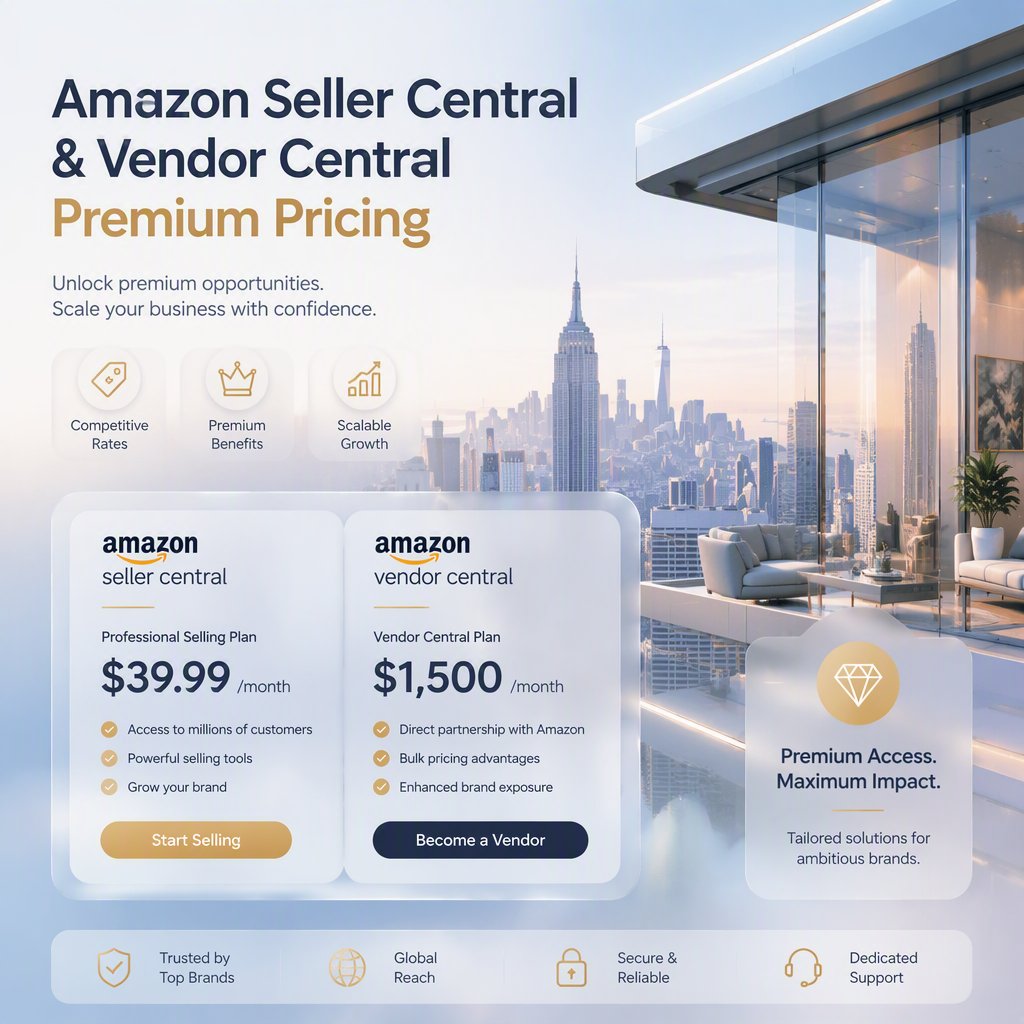
Introduction
A $238 million penthouse in Manhattan might seem far removed from Amazon Seller Central or Vendor Central, but it tells a useful story about premium positioning, scarcity, and how buyers behave when a product sits at the very top of a market. Amazon’s most successful luxury sellers are selling much more than inventory, they’re selling status, trust, and a tightly controlled buying experience.
That matters now because Amazon keeps pushing deeper into premium categories, while sellers and vendors are under more pressure to justify higher prices, protect margins, and stand out in crowded search results. The same forces that make a billionaire buy a trophy property also shape how high-end brands succeed on Amazon.
Core Development
Ken Griffin, the founder of Citadel, paid $238 million for a Manhattan penthouse at 220 Central Park South, one of the most expensive residential deals ever completed in the U.S. The property spans roughly 23,000 square feet across the 50th through 53rd floors, with 16 bedrooms, 17 bathrooms, five balconies, and a terrace facing Central Park.
The building itself is part of Manhattan’s so-called Billionaires’ Row, a stretch of ultra-luxury towers where proximity, privacy, and views carry enormous value. Griffin’s purchase wasn’t just about square footage. It was about combining multiple apartments into a single private residence that functions more like a sky mansion than a standard apartment.
For Amazon professionals, the interesting part isn’t the real estate flex. It’s the business model behind it. Luxury works when a product is rare, highly differentiated, and surrounded by a strong trust signal. That same formula shows up in premium e-commerce, especially for brands selling via Amazon’s marketplace, Seller Central, or through wholesale relationships in Vendor Central.
Technical Deep Dive
At a high level, the Griffin penthouse is a masterclass in inventory consolidation, space premiumization, and experience design. Those ideas map surprisingly well to Amazon.
1.
Scarcity drives price efficiency
A luxury tower at the top of Manhattan can command extreme pricing because supply is constrained. There aren’t many 23,000-square-foot residences with Central Park views, and that scarcity supports the value proposition.
On Amazon, premium brands face a similar dynamic, though it shows up in digital form:
- Limited-edition SKUs can reduce direct price comparison
- Bundles can make listings less commoditized
- Controlled distribution can help maintain margin integrity
- Brand Registry and A+ Content can reinforce uniqueness
When sellers flood the marketplace with too many near-identical listings, they create the opposite of scarcity. Price compression follows fast.
2.
Layout matters as much as raw size
The penthouse was created by combining multiple units into one cohesive residence. That’s important. The market doesn’t reward just size, it rewards coherent utility.
Amazon sellers should think the same way about catalog architecture. A fragmented catalog hurts discoverability and conversion. If product detail pages are split across duplicate ASINs, if variations aren’t structured correctly, or if parent-child relationships are broken, the buying experience gets messy.
Technical implications include:
- Cleaner variation trees improve browse relevance
- Consolidated reviews can increase conversion efficiency
- Duplicate suppression helps prevent traffic dilution
- Better catalog hygiene reduces catalog conflict cases in Seller Central
This is one reason Amazon keeps pushing catalog normalization. The better the structure, the better the customer experience. That logic applies at every tier, from consumables to high-ticket luxury goods.
3.
Premium presentation changes conversion math
A buyer spending millions expects a concierge-level process. In e-commerce terms, that’s the equivalent of frictionless content, confident pricing, and consistent fulfillment signals.
For luxury sellers on Amazon, conversion often depends on:
- High-resolution imagery and lifestyle photography
- Rich product detail pages
- Precise dimensioning and materials data
- Fast, reliable fulfillment through
FBAor a high-performingFBMsetup - Low defect rates and strong account health
When the price point rises, so does customer sensitivity to presentation errors. A missing image, an unclear bullet point, or a delayed delivery estimate can kill conversion.
4.
Infrastructure supports the premium promise
The building’s amenities, doorman, concierge, parking garage, and recreation facilities, are part of the product. They’re not extras. They’re the infrastructure that justifies the price.
That’s very similar to Amazon’s premium seller ecosystem. The “amenities” are operational:
FBAfor fast shipping and customer trust- Brand Registry for IP protection
- A+ Content and Stores for storytelling
- Vine for review seeding on select launches
- Sponsored Brands for controlled visibility
If the infrastructure breaks, the premium promise collapses. A luxury brand can’t rely on product quality alone. It needs service quality, logistics quality, and content quality working together.
Industry Impact
This story says a lot about where Amazon’s highest-value marketplace segments are heading.
Luxury is becoming more operationally demanding
Premium and luxury brands no longer treat Amazon as a side channel. They’re using it as a brand-controlled sales engine, but only if they can preserve image, pricing discipline, and customer service standards. The platform’s scale is attractive, yet scale can also distort luxury positioning if the catalog is unmanaged.
That creates a real challenge for brand owners:
- Open the channel too far, and you invite gray market sellers
- Restrict it too much, and you lose demand capture
- Underinvest in content, and conversion drops
- Overdiscount, and brand equity erodes
The best operators use Amazon like a precision channel, not a fire hose.
Vendor
Central and Seller Central are converging around execution quality
Whether a brand sells wholesale through Vendor Central or directly through Seller Central, the winners are the ones who execute on detail. On the vendor side, that means clean purchase order management, chargeback control, and content compliance. On the seller side, it means inventory planning, account health, and Buy Box discipline.
The Griffin penthouse story mirrors this split in an odd but useful way. There’s the asset itself, and then there’s the operational machinery that makes the asset deliver its value. Amazon brands need both.
Marketplace participants should expect tighter premium standards
Amazon has been steadily raising the bar in categories where trust matters most. That includes luxury beauty, high-end home goods, premium appliances, fashion, and collectibles. As the platform pushes more value into premium segments, it also needs stronger controls around:
- Counterfeit detection
- Authorized reseller enforcement
- MAP pricing discipline
- Content authenticity
- Return abuse monitoring
Luxury buyers are less forgiving than mass-market shoppers when presentation or authenticity looks off. Amazon knows that, and so do brands.
Implementation Considerations
If you’re a seller, vendor, or marketplace operator, here’s what this means in practical terms.
For Amazon sellers
- Audit your catalog for duplicate ASINs and variation errors
- Strengthen your listing content with better images, richer copy, and clearer specs
- Review your pricing strategy for premium SKUs, especially if you’re competing against unauthorized sellers
- Track
Buy Boxperformance and suppression causes closely - Use
Brand Registrytools to protect high-value listings
For Vendor Central users
- Make sure item setup data is complete and consistent across ASINs
- Watch for deduction patterns tied to shortages, late shipments, or compliance issues
- Align content workflows with Amazon’s detail page requirements
- Treat premium items like controlled assets, not generic wholesale inventory
- Build forecasting discipline so you don’t create stockouts on your most visible SKUs
For developers and ops teams
- Clean product data pipelines matter. Bad attributes lead to poor search matching and weak PDP performance
- Use feed validation and automated QA to catch title, image, and variation defects before they hit production
- Monitor listing health, suppression events, and stranded inventory through internal dashboards
- If you manage large catalogs, create rules for premium SKU governance, including price floors and content approval
The big mistake is treating premium products like commodity listings. On Amazon, that usually ends in margin erosion and weak brand control.
ROI considerations
Premium execution costs more. Better content, tighter inventory control, higher service levels, and brand protection all add overhead. But the ROI shows up in:
- Higher conversion rates
- Lower return rates
- Better price realization
- Reduced channel conflict
- Stronger lifetime brand value
That’s especially true in luxury and upper-premium categories, where a single lost sale can represent a lot more revenue than in mass retail.
Future Outlook
The high-end real estate market and Amazon’s premium commerce strategy share a common direction: buyers are paying more for confidence, exclusivity, and convenience. On Amazon, that means the platform will keep investing in tools that make premium products easier to present and harder to counterfeit.
Expect more emphasis on:
- Brand-controlled storefronts
- Better enforcement around authorized sellers
- Richer media formats
- More granular catalog quality scoring
- Fulfillment signals that support premium positioning
We’ll probably also see luxury brands become more selective about where they sell, which ASINs they allow, and how aggressively they discount. The days of treating Amazon as a simple distribution dump are fading for premium categories.
For sellers and vendors, that’s both a challenge and an opportunity. The challenge is operational discipline. The opportunity is that brands with strong execution can win meaningful share in categories where trust and presentation matter more than raw price.
Conclusion
Ken Griffin’s $238 million penthouse is extreme, but it’s a clean example of how value is created at the top end of a market. Scarcity, coherence, service, and control all matter. That’s true in Manhattan real estate, and it’s just as true on Amazon.
For Amazon sellers and Vendor Central teams, the lesson is straightforward:
- Treat premium SKUs like flagship assets
- Keep catalog structure clean
- Protect brand value with strong content and pricing discipline
- Build operational systems that support trust at every step
The sellers and vendors who get this right won’t just sell more. They’ll sell better.