Amazon Seller Central and Vendor Central: What Pinterest’s CFO Exit Means
Salevoyant Editorial · August 30, 2026
Introduction
Pinterest’s finance chief is heading out in late October, and on the surface that looks like a standard executive transition. It’s worth more attention than that, especially for anyone tracking Amazon’s broader ecosystem, because Pinterest’s recent growth story has been tightly linked to cloud infrastructure, ad tech, and retail media economics. The company’s $4 billion cloud-services deal with Amazon Web Services tells us something important about where large digital platforms are putting their money and why.
Core Development
Pinterest said Chief Financial Officer Julia Donnelly will step down on October 30, with an external search already underway for her replacement. In the meantime, Vikram Naidu, Pinterest’s vice president of finance and business operations, will serve as principal financial officer.
Donnelly joined Pinterest in 2023 after serving as global head of finance at Wayfair. During her tenure, Pinterest says it delivered 11 consecutive quarters of double-digit revenue growth, improved operating discipline, and expanded margins. That matters because Pinterest has spent the last two years trying to prove it can be more than a consumer app with good engagement. It’s trying to be a durable ad platform with cleaner economics.
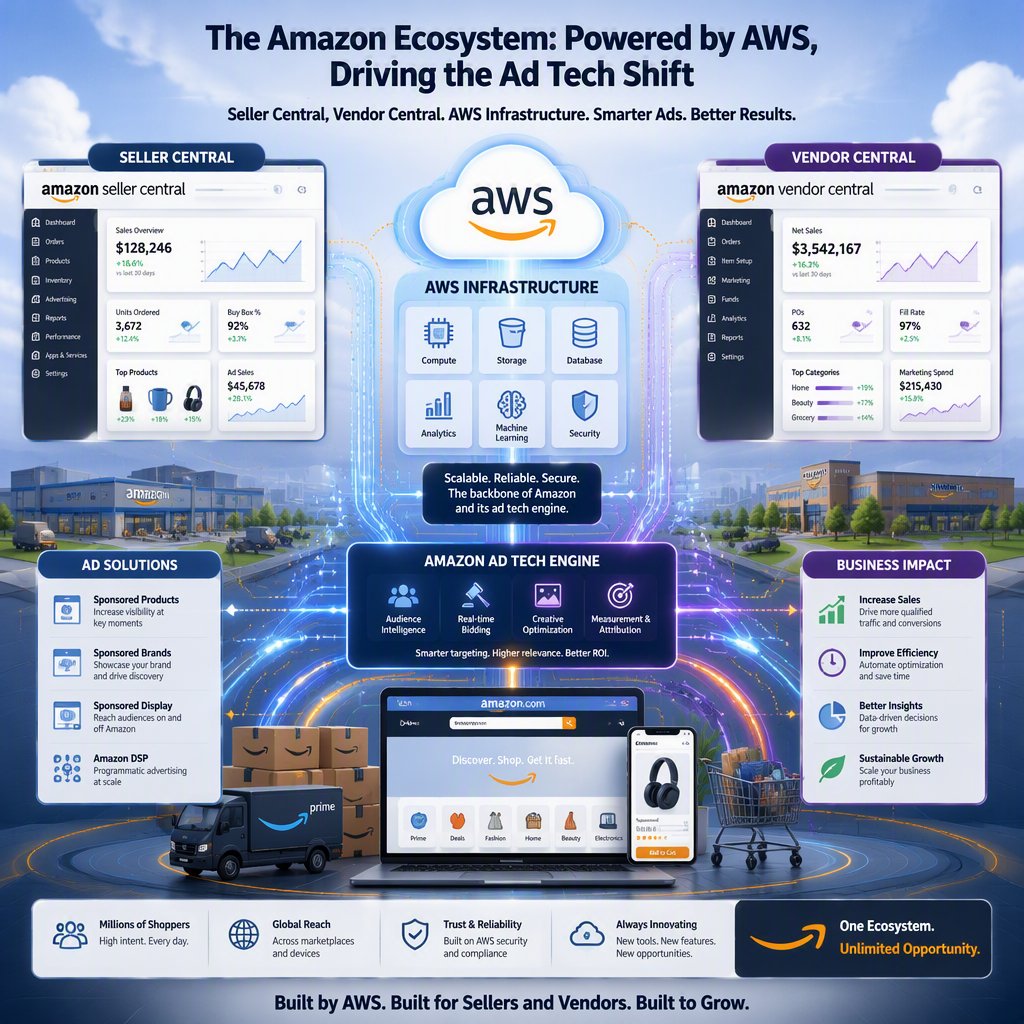
There’s also a direct Amazon connection here. Pinterest completed a $4 billion cloud-services partnership with AWS, which sits at the center of how modern ad platforms scale infrastructure, process data, and support machine learning workloads. Donnelly’s exit doesn’t change that deal, but it does highlight how intertwined financial leadership and cloud strategy have become in ad tech.
The timing matters too. Pinterest recently warned that third-quarter revenue growth would slow, pointing to tougher competition in digital advertising, especially from larger platforms like Meta’s Instagram. That puts pressure on every part of the business, from cost control to data efficiency to ad product performance.
Technical Deep Dive
A lot of people hear “CFO change” and think only about finance. In a company like Pinterest, though, finance is tightly connected to infrastructure architecture, ad delivery systems, and cloud unit economics.
Why the AWS deal matters
A multi-billion-dollar cloud commitment usually isn’t just about storage and compute. For an ad platform, it typically supports:
- Data ingestion pipelines for clicks, impressions, saves, conversions, and audience signals
- Real-time bidding and ranking systems that decide which ad gets shown
- Machine learning inference for recommendation and targeting models
- Analytics workloads for advertiser reporting and attribution
- Disaster recovery and redundancy across regions
In practice, this means Pinterest is likely optimizing for scale, reliability, and predictable cost structure. Ad systems are extremely sensitive to latency. If the ad server or recommendation engine slows down, user engagement drops and revenue takes a hit fast. Cloud architecture has to keep response times tight while handling traffic spikes, especially around retail-heavy periods like Prime Day, Black Friday, and holiday shopping.
For Amazon sellers and Vendor Central users, the important lesson is that ad platforms increasingly behave like infrastructure businesses. They’re not just selling media. They’re running large-scale data systems. That changes how they price, forecast, and invest.
Financial leadership and cloud operations are now linked
Pinterest’s finance team isn’t just reviewing P&Ls. It’s probably modeling:
- Compute spend per active user
- Infrastructure cost per ad impression
- Gross margin impact of recommendation improvements
- Payback periods for new ad products
- Long-term cloud commitments versus variable on-demand usage
That’s a classic capex-like decision pattern in an opex model. Cloud services are technically operating expenses, but big reserved commitments can act like long-term capacity planning. If usage forecasts are off, costs can move quickly in the wrong direction. If the platform scales efficiently, margins improve and the business gets more room to invest in product.
This is where Amazon’s role becomes especially interesting. AWS doesn’t just sell storage and servers. It helps shape how digital platforms structure cost controls, experiment with ML, and handle demand surges. For companies in retail media and adjacent ad tech, that can directly affect ad pricing, campaign pacing, and performance reporting.
What this means for ad measurement
Pinterest, like Amazon Ads, lives and dies by measurement quality. Advertisers want to know which clicks matter, which conversions are real, and whether the platform is driving profitable traffic. That requires:
- Event-level tracking
- Identity resolution across devices and sessions
- Attribution logic
- Fraud filtering
- Incrementality analysis
Those systems are expensive to run. They also face privacy and browser-policy constraints. So cloud efficiency isn’t just about saving money, it’s about keeping measurement accurate enough to retain advertiser trust.
For Amazon sellers, this is familiar territory. On Amazon, campaign data in Sponsored Products, Sponsored Brands, and Sponsored Display is only as useful as the quality of the underlying signals. If conversion tracking is noisy or delayed, bid strategies can misfire. The same principle applies to Pinterest at platform scale.
When ad platforms get more expensive to operate, they usually get more selective about the advertisers, campaigns, and formats they prioritize.
Industry Impact
For the Amazon ecosystem, Pinterest’s CFO transition is a useful reminder that retail media and social discovery are converging around the same technical stack.
Amazon sellers now operate in a world where product discovery doesn’t start and end on Amazon. It can begin on Pinterest, Instagram, TikTok, or a publisher network, then route back to marketplace checkout. That creates a more complex attribution path, but it also opens up more demand capture points.
Here’s the strategic connection:
- Amazon Ads remains the core performance engine for marketplace sellers
- Off-Amazon discovery platforms like Pinterest help seed intent earlier in the funnel
- Cloud infrastructure underpins the targeting, tracking, and reporting that tie those stages together
If Pinterest keeps tightening margins while scaling ad revenue, it reinforces a broader industry trend. Platforms are expected to act like disciplined software companies, not just growth-at-all-costs consumer apps. That’s the same pressure Amazon places on its own businesses, including its retail media network and Vendor Central tooling.
For vendors, this has a practical side. Better cloud economics often translate into better ad product stability, more granular reporting, and faster rollout of media features. But they can also mean stricter pricing and more pressure to justify spend with clear return on ad spend, or ROAS.
For sellers, the indirect effect is real:
- More competition for attention across channels
- Higher expectations for attribution quality
- More sophisticated media mix planning
- Increased need to compare Amazon-native ads with external traffic sources
If Pinterest or similar platforms improve their infrastructure efficiency, they can ship more advanced ad features. That could mean stronger audience modeling, better conversion APIs, or tighter integrations with retail partners. It could also mean more competition for the same ad dollars Amazon sellers already allocate across search, social, and DSP-like programs.
Implementation Considerations
If you’re a seller, vendor, or e-commerce operator, there are a few practical lessons buried in this announcement.
1.
Treat cloud strategy as a business signal
A platform’s major cloud commitments aren’t background noise. They often tell you where the company is investing in:
- Performance
- Data science
- Ad measurement
- Regional expansion
- Cost optimization
For Amazon sellers using external traffic, this matters because platform infrastructure quality affects campaign stability. If an ad network’s reporting lags or conversion signals degrade, your campaign decisions get worse.
2.
Expect tighter performance standards
As ad platforms mature, they tend to demand cleaner economics. That usually means:
- More emphasis on efficient campaigns
- Less tolerance for sloppy targeting
- More automation in bidding and budget allocation
- Stronger pressure on advertisers to prove profitability
Amazon sellers should apply the same discipline inside Seller Central. Don’t just look at ACOS. Track TACOS, contribution margin, and repeat purchase behavior where possible. A campaign that looks expensive at the ad level can still be rational if it supports organic lift or high-LTV product lines.
3.
Watch for measurement fragmentation
The more channels you use, the harder attribution gets. Pinterest, Amazon, Google, and Meta all report success differently. That means your internal reporting stack needs to normalize:
- Session attribution
- Conversion windows
- View-through versus click-through credit
- SKU-level profitability
- New-to-brand or new-to-category signals
If you’re a vendor using Vendor Central plus Amazon Ads plus off-site media, this is where a shared dashboard or clean BI layer starts paying for itself.
4.
Don’t ignore infrastructure costs in media planning
A lot of teams think media optimization ends with keyword bids. It doesn’t. Infrastructure choices influence whether platforms can offer better tools, richer APIs, and faster data refresh. That affects your ability to react to market changes.
For example, during a peak shopping period, if a platform can’t refresh reporting quickly enough, you’ll overbid or underbid. That’s not a small problem. It can distort spend across your entire catalog.
Future Outlook
Pinterest’s finance leadership change probably won’t alter the company’s AWS relationship right away, but it does suggest the next phase of growth will be judged more harshly on efficiency, not just revenue expansion. That’s the direction most digital platforms are heading.
For Amazon’s ecosystem, the implication is straightforward. Retail media is becoming more technical, more capital-intensive, and more dependent on cloud economics. The winners won’t just be the platforms with the largest audience. They’ll be the ones that can process data faster, measure better, and keep margins healthy while doing it.
That should get sellers and vendors thinking about their own media stack. If your business still separates “Amazon ads” from “everything else,” you’re probably missing how connected these systems are becoming. Cloud contracts, attribution quality, and campaign economics are part of the same conversation now.
Conclusion
Pinterest’s CFO departure is more than an executive shuffle. It’s a window into how modern ad platforms are managed, funded, and scaled, especially when AWS sits underneath a large part of the stack. The real story here is the growing overlap between finance, infrastructure, and ad performance.
For Amazon sellers and Vendor Central users, the takeaway is clear:
- Cloud economics shape ad product quality
- Measurement accuracy drives media efficiency
- Cross-channel discovery is getting harder to separate from marketplace demand
- Financial discipline is now part of platform strategy, not just back-office management
If you’re building a media plan for 2026 and beyond, don’t just compare CPMs and CPCs. Look at the systems behind them. That’s where the next advantage is hiding.