Amazon Seller Central: How to Check for Water Damage Before FBA Shipping
Salevoyant Editorial · October 10, 2026
Introduction
A Wave of Long Island headline about spotting flood-damaged used cars raises a practical question for Amazon sellers: how do you detect compromised inventory before it reaches a customer? As of October 10, 2026, the supplied source doesn’t establish a new Amazon announcement, but it does offer a useful lens on inventory provenance, condition accuracy, and the limits of marketplace quality controls.
Core Development
The source focuses on identifying flood damage when buying a used Honda from a dealership serving Queens or a private seller. The supplied material contains only the headline and a brief summary, so it doesn’t support claims about particular inspection methods, affected vehicles, or new regulatory action.
That distinction matters. This isn’t evidence of a Seller Central policy change, a Vendor Central update, or an Amazon automotive initiative. Its relevance to Amazon is the underlying commercial problem: damage can remain hidden while an item moves through multiple owners or distribution channels.
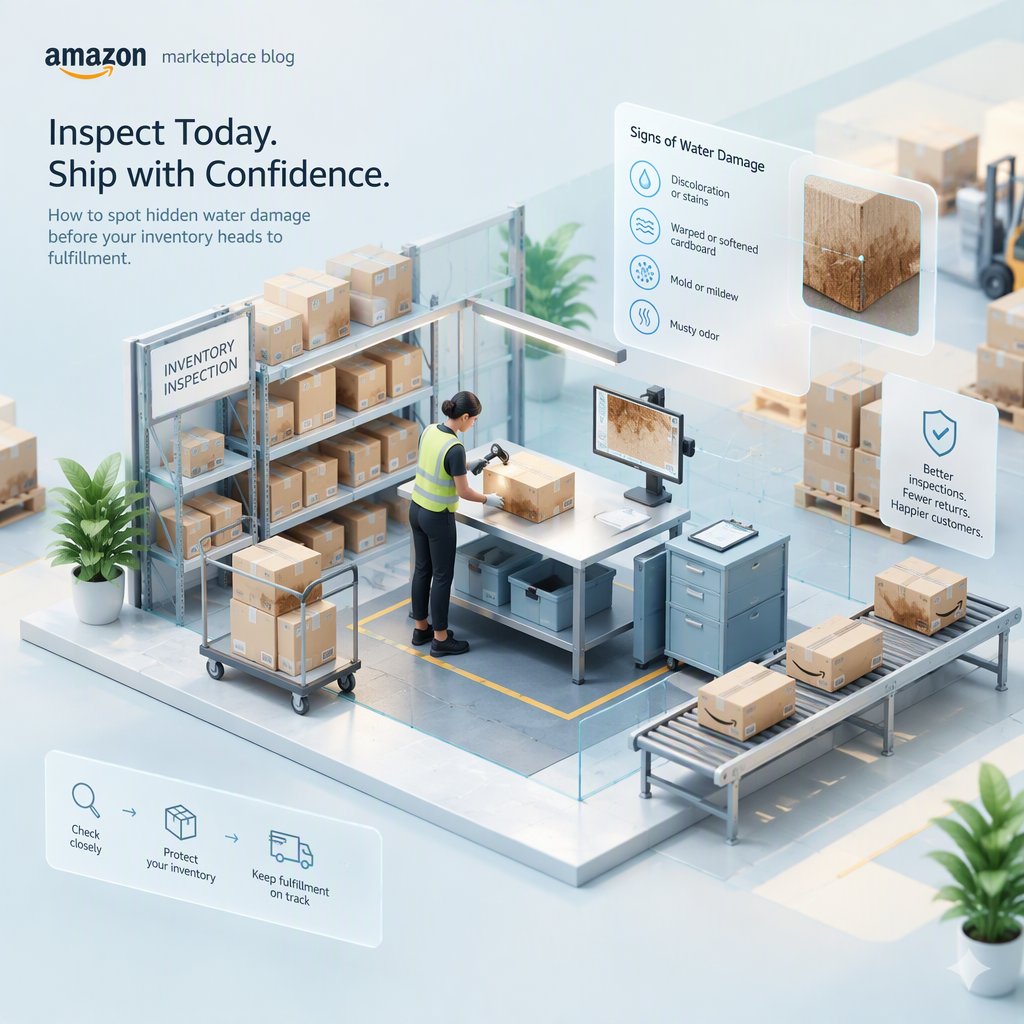
For marketplace sellers, the equivalent risk appears in liquidation pallets, customer returns, warehouse salvage, and inventory purchased from unfamiliar wholesalers. Packaging may look intact even when the product has experienced moisture exposure.
The seller-focused takeaway is straightforward: a supplier’s description isn’t a substitute for inspection and traceability. A product listed as new must satisfy Amazon’s applicable condition requirements. Depending on the damage, category, and safety implications, compromised stock may be unsuitable for sale at all.
Technical Deep Dive
Hidden damage requires more than a visual check
Water exposure creates different failure modes across product categories. Electronics can develop corrosion or conductive residue. Textiles may retain moisture or contamination. Paper packaging can weaken, while metal components may show delayed corrosion.
A device that powers on isn’t necessarily safe or reliable. Short functional tests can miss intermittent faults and deterioration that appears after repeated use.
Inspection should therefore be risk-based, not uniform. An automotive floor mat and an electronic battery charger don’t warrant the same checks. Suspected water-exposed electrical products may require qualified assessment or rejection rather than a quick wipe-down and resale.
The question isn’t simply whether an item works today. It’s whether the seller can reasonably support its condition, safety, and provenance.
Build traceability below the SKU level
A seller SKU identifies an offer or inventory item in the seller’s system. An ASIN identifies a catalog product. Neither, by itself, tells an operations team which supplier shipment experienced a warehouse leak.
That requires a separate lot-level inventory record.
Useful fields include:
supplier_idand purchase-order referencelot_idor inbound shipment identifier- Receipt date and receiving location
- Inspection status and supporting photographs
- Serial numbers, where applicable
- Disposition: approved, quarantined, returned, or destroyed
Consider 300 identical chargers purchased through three separate wholesale orders. If 100 units belong to a suspect shipment, an aggregate count of 300 hides the problem. Lot-level records let the business isolate those 100 units, provided physical storage and fulfillment records preserve that separation.
Scalability starts here. Recording provenance at receipt is far cheaper than reconstructing it after complaints arrive.
Use
Amazon data without expecting it to prove safety
The Selling Partner API, or SP-API, can support integrations for eligible seller accounts, subject to authorization, permissions, and endpoint availability. FBA inventory and returns data can help reconcile quantities and identify patterns. Listings integrations can support eligible offer-management workflows.
These capabilities don’t replace physical inspection.
A sound architecture joins Amazon identifiers to the seller’s warehouse management system, or WMS. The WMS stores lot provenance and inspection evidence; marketplace data supplies sales, inventory, and return signals.
One limitation deserves attention: Amazon reports don’t necessarily preserve the seller’s internal lot identity through every fulfillment event. Teams must validate the mapping rather than assume they can associate every returned unit with its original purchase order.
Industry Impact
The broader Amazon connection is catalog trust. Customers shop a product detail page, but the quality of the delivered unit depends on sourcing, storage, and handling.
That gap affects several participants:
- Seller Central merchants carry exposure through refunds, complaints, lost inventory value, and potential compliance problems.
- Vendor Central suppliers need consistent quality controls before shipping inventory into Amazon’s retail supply chain.
- Brands face reputational damage when defective or misrepresented units reach buyers, even if the brand didn’t supply those units directly.
- Customers struggle to evaluate hidden damage before delivery.
Brand Registry isn’t a physical inspection service. Catalog and brand-protection tools can help with certain listing and intellectual-property issues, but they don’t establish whether a particular unit has experienced water exposure.
For vendors, invoices and shipment documentation support commercial traceability. They aren’t proof of product condition. Quality records need to sit alongside those documents.
The used-car comparison also exposes an uncomfortable incentive: discounted inventory can make a sourcing deal look attractive before downstream costs enter the calculation. Margin disappears quickly when inspection failures become customer returns.
Implementation Considerations
Start with a controlled exception workflow, not a complicated prediction model.
Establish a quarantine gate
Suspect inventory should move into a physically segregated location and a blocked system status. A spreadsheet flag alone won’t prevent an employee from picking the wrong unit.
A workable sequence is:
- Receiving staff identify exposure indicators or missing provenance.
- The WMS assigns
inspection_hold. - The affected stock becomes unavailable for shipment.
- A qualified reviewer determines the disposition.
- The business retains evidence and records the outcome.
If affected stock is already at FBA, coordinate the appropriate inventory action through available Seller Central controls and support channels. Closing an offer can limit further sales, but it doesn’t inspect or remove physical units.
Safety concerns may require additional reporting or recall procedures. Check the applicable product rules and Amazon requirements rather than treating removal as a complete remedy.
Make automation conservative
Engineers can connect inspection status to available inventory, but the workflow needs safeguards. API rate limits, failed requests, and delayed data synchronization can leave systems inconsistent.
Use idempotent actions, retries with backoff, audit logs, and alerts for unresolved failures. Where uncertainty exists, block the affected stock locally rather than assuming a marketplace update succeeded.
Time matters more than dashboard polish. A quarantine decision that takes hours to reach fulfillment leaves a window for defective inventory to ship.
Calculate the economics honestly
Suppose a seller buys 200 units at a