Amazon Seller Central: Trezor Dealer Cutoff and Invoice Checks
Salevoyant Editorial · October 18, 2026
Introduction
Amazon sellers carrying Trezor hardware wallets have a channel-risk question to resolve before the new year. A CryptoTicker headline reports that Trezor’s dealer authorizations end on January 1, 2027, potentially affecting how resellers document their relationship with the brand and manage remaining inventory.
As of October 18, 2026, the available evidence is summary-only RSS material, not a retrieved article or verified Trezor policy notice. That limits what we can confirm, but the reported cutoff gives sellers a reason to review sourcing records, listing claims, and purchase commitments now.
Core Development
The CryptoTicker report surfaced through Google News states that Trezor is cutting its authorized dealers and that authorizations end on January 1, 2027.
The supplied summary doesn't establish which dealers, countries, products, or contractual arrangements are affected. It also doesn't explain whether there are sell-through provisions, warranty changes, exceptions, or a revised distribution model.
Those gaps matter. Ending a dealer authorization isn't automatically the same as prohibiting every resale of genuine goods. Nor does this headline establish that Amazon will remove Trezor offers, change category restrictions, or end a purchasing relationship.
For marketplace businesses, three questions need separate answers:
- Brand relationship: Does the seller still have permission to describe itself as an authorized dealer?
- Amazon eligibility: Can the account continue offering the relevant products under applicable Amazon requirements?
- Customer support: What warranty and support terms apply to purchases made through that seller?
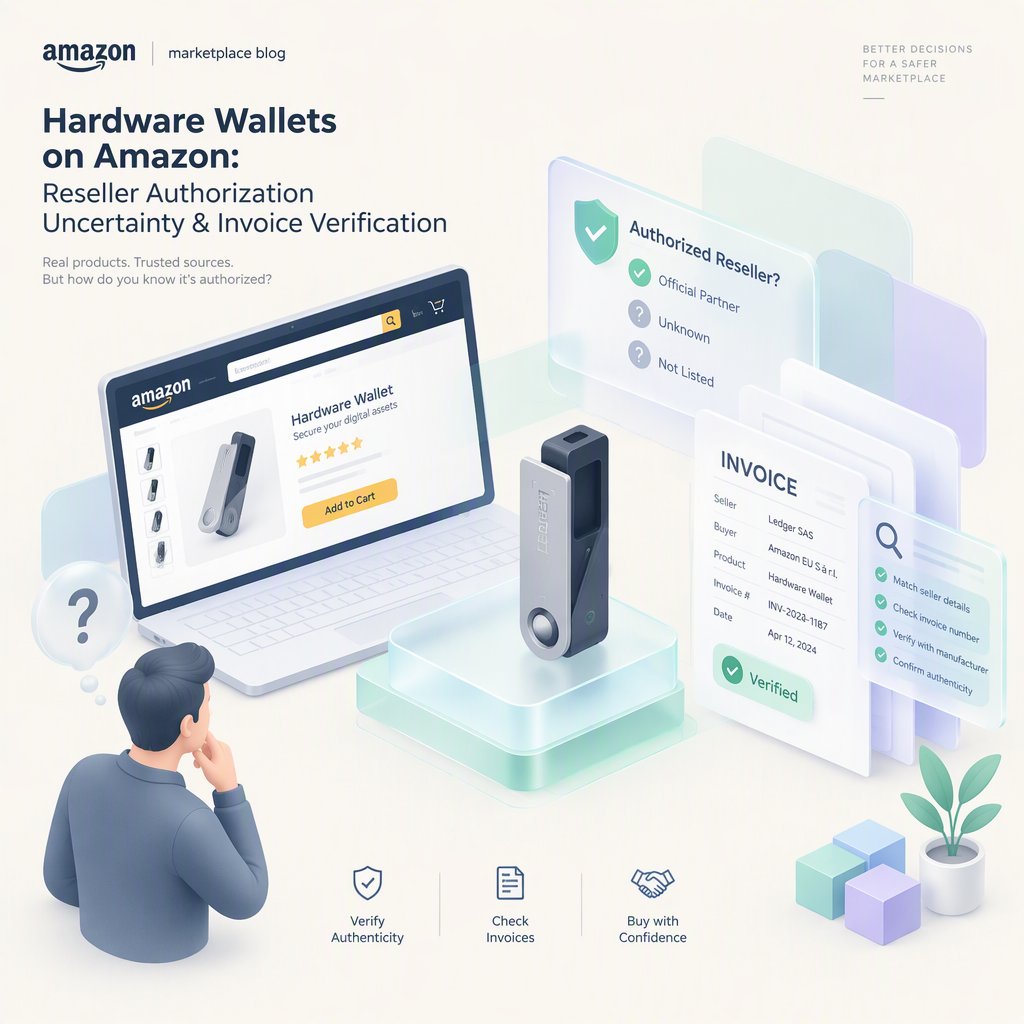
One answer doesn't settle the others. A genuine product, a valid sourcing invoice, and a current dealer authorization are different pieces of evidence.
Technical Deep Dive
Hardware wallets make distribution changes more sensitive than they would be for ordinary accessories. These devices typically keep private keys within the wallet and sign transactions without exposing those keys to the connected computer. Buyers therefore care about device provenance, packaging integrity, and whether someone has interfered with the product before delivery.
Analysis: A narrower authorized channel could give a manufacturer more control over those trust signals. However, the RSS summary doesn't identify Trezor’s motivation, so security, channel consolidation, and direct-sales economics remain possible explanations, not reported facts.
Product identity isn't supply-chain proof
On Amazon, an ASIN identifies a catalog product. It doesn't certify every seller’s sourcing relationship. Multiple sellers can offer the same catalog item while holding different invoices, distribution agreements, and support arrangements.
An FNSKU, where used for FBA inventory, helps identify inventory associated with a seller and offer. It isn't proof that the manufacturer authorizes that seller.
This distinction is easy to miss when catalog, inventory, and compliance data live in separate systems. A warehouse record may show an authentic model with sufficient stock while the compliance record shows an expiring authorization.
A listing can remain operational while the evidence behind its authorization claims becomes outdated.
The practical fix is to track authorization as a dated business record, not a permanent product attribute. Useful internal fields include supplier_id, invoice_reference, authorization_expiry, sales_channel, and territory. Sellers should preserve the underlying documents rather than relying only on database labels.
Automate checks, not policy assumptions
The Selling Partner API, or SP-API, can support inventory and listing monitoring where the relevant resources and permissions are available. It can't independently determine whether a private distribution agreement permits sales after a reported cutoff.
An internal workflow could flag affected SKUs when an authorization approaches expiry. A human then checks the actual agreement and decides whether to pause replenishment, correct seller-specific claims, or seek clarification.
Keep those checks outside the order-processing path. A scheduled compliance review can scan a large catalog without adding latency to every transaction. It should also distinguish unknown status from confirmed restriction, preventing incomplete records from triggering unnecessary shutdowns.
Industry Impact
This isn't an announced Amazon policy update. It's a reported supplier-channel change with possible consequences for businesses operating on Amazon.
Analysis: The wider marketplace issue is the gap between catalog access and distribution rights. Amazon’s shared catalog makes products discoverable across competing offers, but the platform also requires sellers to meet authenticity, condition, intellectual-property, and other applicable requirements. A brand’s changing dealer network can create friction between those two realities.
For third-party sellers, the immediate risk is uncertainty around replenishment and representation. A business shouldn't keep purchasing stock on the assumption that an old authorization letter remains sufficient indefinitely.
For Vendor Central users, the analysis is different. Amazon acts as the retail buyer in a first-party relationship, rather than merely hosting a third-party offer. The headline doesn't tell us whether any Amazon retail supply arrangement is affected. Vendors should examine their own agreements and purchase-order obligations, not extrapolate from dealer terminology.
Consumers could face trade-offs if the reported change reduces authorized buying options. A tighter channel may make seller status easier to understand, while fewer outlets could reduce price competition or local availability. Neither outcome is established by the supplied report.
Implementation Considerations
Start with evidence. Changing prices or accelerating advertising before understanding the terms could turn a manageable documentation issue into an inventory problem.
Confirm scope and correct claims
Request written clarification from Trezor or the relevant contractual supplier. Ask:
- Which legal entities, territories, and sales channels are covered?
- Does existing inventory have a permitted sell-through period?
- How do support and warranty terms apply after January 1, 2027?
- What happens to outstanding orders and returns?
- Must sellers remove authorized-dealer statements from their materials?
Review seller-specific storefront content, advertisements, and customer communications for authorization claims. Shared product detail pages need separate care because their content may serve multiple offers. Don't replace an unverified claim with another one.
Separate inventory and documentation decisions
Build a report covering on-hand units, inbound stock, open purchase orders, sales velocity, and return exposure. Keep warehouse status separate from contractual status.
For example, stock purchased under an earlier agreement may raise different questions from a replenishment order placed after that agreement expires. That's a scenario to investigate, not evidence that Trezor permits either category.
For hardware wallets, returned or opened devices warrant particular attention. Apply relevant Amazon condition requirements and manufacturer guidance. Don't assume every return belongs back in sellable stock.
Model the economics before committing
Evaluate more than gross margin. Include potential storage, removal, markdown, returns, and documentation costs when comparing continued replenishment with a purchasing pause.
A simple decision model can use:
expected_contribution = sales_margin - fulfillment_costs - storage_costs - expected_returns - compliance_costs
This isn't an Amazon fee formula. It's an internal planning framework. Its value comes from making uncertainty visible, especially where a small margin depends on uninterrupted eligibility and low return rates.
Future Outlook
Analysis: If confirmed, Trezor’s reported move would fit a broader tension in e-commerce: manufacturers want consistent customer experiences, while marketplaces reward broad selection and competition between offers.
Security-sensitive products make that tension sharper. Buyers aren't just comparing features. They're assessing whether the seller, packaging, and support chain are trustworthy.
For developers serving marketplace businesses, the opportunity is better compliance lifecycle management. Systems that connect supplier documents, expiration dates, inventory batches, and affected offers can identify exposure before a dispute arises. They still need human review. Software can't resolve missing contract language or substitute for written confirmation.
Conclusion
The reported January 1, 2027 cutoff deserves attention, but it doesn't justify declaring an Amazon sales ban. The available source establishes a headline-level claim about dealer authorizations, not its full operational consequences.
Sellers should confirm the scope, audit authorization language, preserve sourcing documents, and review purchasing commitments. Vendor Central users should assess their own supply agreements separately.
The takeaway is simple: track authorization, product authenticity, and Amazon selling eligibility as separate questions. That discipline protects inventory decisions and customer trust, even when the initial news leaves important details unanswered.