Amazon Seller Central: uParcel’s Malaysia Fulfilment Expansion Explained
Salevoyant Editorial · November 15, 2026
Introduction
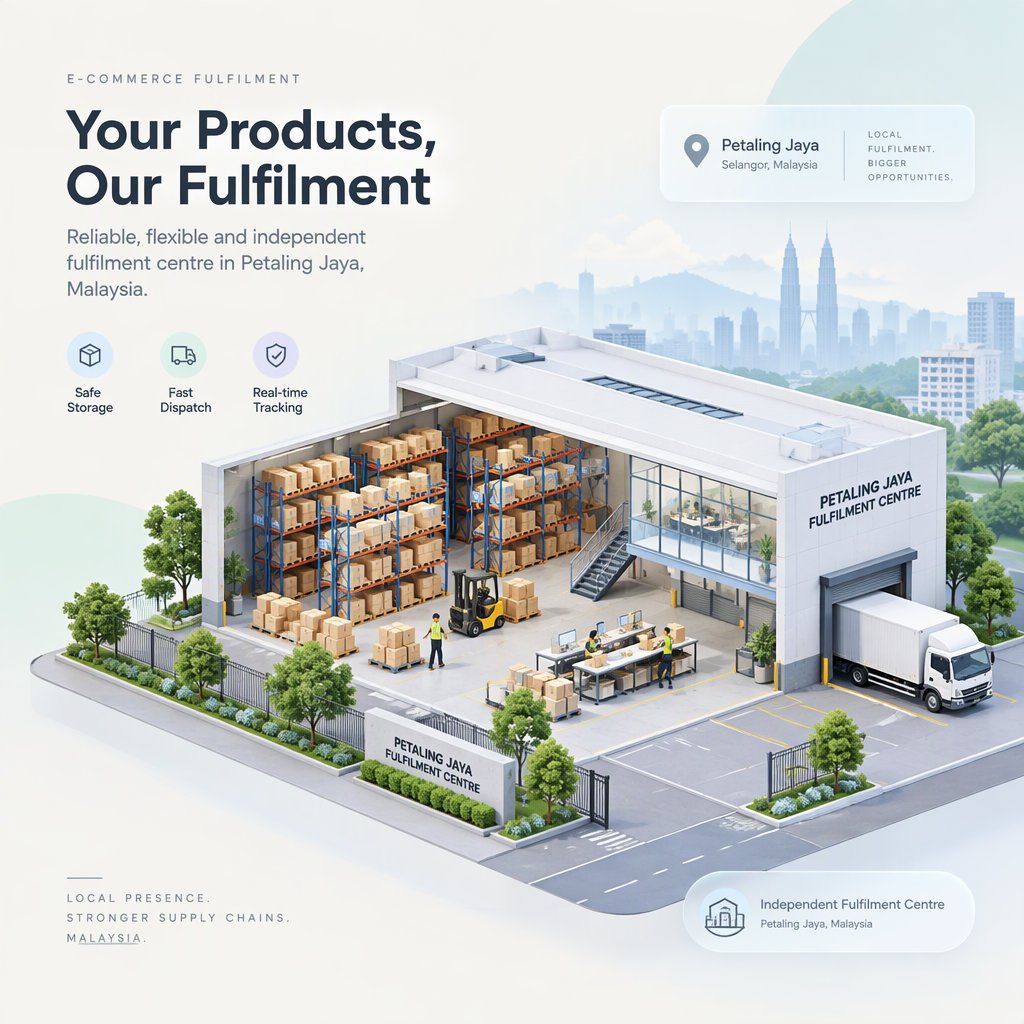
A fulfilment centre can change an e-commerce business’s economics more than another delivery option can. A summary-only report carried by the South Bend Tribune says uParcel is expanding beyond delivery with a new e-commerce fulfilment centre in Petaling Jaya, Malaysia, raising practical questions for sellers managing inventory across regional marketplaces and Amazon.
For Amazon-focused businesses evaluating logistics options on November 15, 2026, the relevance is indirect: this isn’t an Amazon announcement, but it points toward a broader competition over who stores inventory, processes orders, and controls the customer delivery experience.
Core Development
The provided RSS summary reports that uParcel opens a new fulfilment centre in Petaling Jaya, within Malaysia’s Klang Valley, as it expands its operations beyond delivery.
That’s the confirmed scope of the source material. The full article wasn’t retrieved, and the summary doesn’t establish:
- Warehouse capacity, pricing, or service-level commitments.
- Supported marketplace integrations or inventory-management software.
- Amazon partnerships, FBA preparation services, or cross-border capabilities.
- The facility’s opening date or customer eligibility requirements.
Those omissions matter. Sellers shouldn’t read “e-commerce fulfilment” as evidence of Amazon-ready operations.
Analysis: The strategic change is the move upstream. A delivery provider typically receives a parcel after someone else has picked and packed it. A fulfilment provider can potentially participate earlier, storing goods and preparing orders before handing them to a carrier. Whether uParcel offers each of those functions at this location requires verification.
The business opportunity is clear: an operator involved before dispatch can address warehouse-to-carrier coordination problems, not just transport parcels after they leave the building.
Technical Deep Dive
Inventory accuracy comes before delivery speed
A warehouse becomes useful to marketplace sellers when its physical operations match its digital records. That requires a warehouse management system, or WMS, that tracks sellable units, reserved stock, damaged goods, and returns separately.
Consider an illustrative seller with 100 units of one product. If 12 units are allocated to accepted orders and three are quarantined for inspection, only 85 should remain available before any safety-stock allowance. Publishing 100 to every sales channel creates overselling risk.
For Amazon merchant-fulfilled offers, available inventory must reach Amazon through an appropriate integration, potentially using the Selling Partner API, or SP-API. The RSS summary provides no evidence that uParcel supports this.
A sound architecture usually connects three layers:
- WMS: Tracks physical stock, picking, packing, and warehouse exceptions.
- Order management system: Routes orders and reserves inventory across channels.
- Marketplace connector: Exchanges inventory, order, and shipment information with Amazon or other platforms.
The connector needs retries, reconciliation, and idempotency, which prevents a repeated request from creating duplicate work. A timed-out order submission shouldn’t generate two warehouse orders when the system retries.
Dispatch events need precise definitions
“Packed,” “label created,” and “carrier accepted” aren’t interchangeable.
A seller integrating a fulfilment provider should map operational events such as order_received, pick_completed, and carrier_handover to the relevant marketplace workflow. These are illustrative internal event names, not documented uParcel fields.
Tracking accuracy affects customer expectations and seller performance. Creating a label doesn’t prove that a parcel has entered the carrier network. Shipment confirmation should follow Amazon’s applicable requirements, with valid tracking information where required.
Local fulfilment isn’t cross-border infrastructure
Petaling Jaya may be useful for a business serving Klang Valley customers. Its location alone doesn’t establish suitability for individual Amazon orders going to another country.
Cross-border shipments introduce customs documentation, duties, destination-country product rules, transit variability, and costly returns. Faster warehouse processing can’t remove those dependencies.
For some businesses, the more plausible model is regional stockholding followed by consolidated replenishment, rather than shipping each international consumer order from Malaysia. That remains an option to investigate, not a confirmed uParcel service.
Industry Impact
The Amazon connection here is a fulfilment strategy question, not a platform update.
Amazon’s Fulfilment by Amazon, or FBA, integrates storage and fulfilment with the marketplace shopping experience. Independent fulfilment providers compete on a different basis: potentially serving multiple channels, offering local support, or accommodating operational needs outside an Amazon-centred workflow.
There’s no automatic substitute.
A third-party warehouse can add fulfilment flexibility, but it doesn’t automatically provide FBA eligibility, Prime delivery benefits, or Amazon-compliant shipment performance.
For Seller Central users, the development raises a useful sourcing question: could a regional provider support local orders, hold buffer inventory, or prepare replenishment shipments economically? Sellers must verify each capability before building it into their operating model.
For Vendor Central users, the requirements are different. Vendors generally supply Amazon against purchase orders rather than manage the same consumer-order workflow as third-party sellers. Warehouse suitability depends on purchase-order accuracy, carton preparation, shipment notices where required, delivery arrangements, and Amazon’s applicable receiving requirements.
A provider experienced in parcel delivery may not be experienced in vendor compliance. Mistakes can produce receiving delays or chargebacks.
For consumers, the potential benefit is fewer handoffs between storage and delivery. The risk is that a wider service offering stretches the operator’s systems or staff. Operational execution decides which outcome wins.
Implementation Considerations
Before moving stock, sellers should run a limited pilot and ask for evidence rather than broad service claims.
Test the integration
Request API documentation or sample data files. Confirm how the provider handles:
- SKU mapping, bundles, and barcode mismatches.
- Order cancellations after picking starts.
- Inventory adjustments and stock reconciliation.
- Tracking updates and failed delivery events.
- Returned goods awaiting inspection.
During the pilot, reconcile warehouse stock against marketplace inventory daily. Measure discrepancies and correction time. A fast connector isn’t much help if its numbers are wrong.
Compare total fulfilment cost
Don’t compare only the pick-and-pack fee with an FBA fee.
A useful cost-per-order model includes inbound transport, receiving, storage, packaging, dispatch, integration, returns, and exception handling. International scenarios also need customs-related costs and destination delivery charges.
For illustration, a saving of $0.40 per order across 1,000 monthly orders produces $400 before fixed costs. A $500 monthly integration or account charge would erase that saving before accounting for returns or errors. These figures are hypothetical, not uParcel pricing.
Evaluate ROI alongside service quality. Slightly cheaper fulfilment can become expensive when it causes cancellations, customer contacts, or replacement shipments.
Stress-test peak operations
Average processing time hides the difficult cases. Ask about order cutoffs, receiving backlogs, peak-day capacity, and escalation procedures.
Measure the time from order acceptance to carrier handover, including the slowest orders. For Amazon merchant-fulfilled operations, check the current requirements in the relevant Seller Central account rather than assuming one market’s rules apply everywhere.
Start with a narrow SKU range and explicit stop conditions. Expand only after stock accuracy, dispatch performance, and returns processing meet agreed targets.
Future Outlook
Analysis: uParcel’s reported expansion suggests a familiar direction in logistics: delivery operators seeking a larger role in the merchant’s workflow.
Storage and order processing can deepen customer relationships, but they also introduce harder operational problems. Warehouse staffing, stock control, integration support, and exception handling must scale together. Adding floor space alone doesn’t solve them.
For Amazon participants, the longer-term opportunity is more choice in regional inventory positioning. A merchant could use different providers for local demand, export preparation, and destination-market fulfilment, provided the systems maintain a reliable inventory record.
The questions to watch are specific: Does uParcel document marketplace integrations? Does it publish measurable service commitments? Can it support compliant replenishment or cross-border operations? The available summary doesn’t answer those questions yet.
Conclusion
uParcel’s new Petaling Jaya fulfilment centre is a regional logistics development worth evaluating, not a confirmed Amazon integration or Seller Central change.
Sellers should verify inventory controls, shipment-event accuracy, total costs, and destination-market compliance before committing stock. Vendors need a separate assessment against Amazon purchase-order and receiving requirements.
The practical next step is modest: request technical documentation and a service agreement, then test a small workload. Let measured performance, not the fulfilment label, determine whether the facility belongs in your supply chain.