Amazon Seller Central vs. AWS Partner Central: Where the New AI Fits
Salevoyant Editorial · November 21, 2026
Introduction
Amazon Web Services is promoting new AI capabilities in AWS Partner Central with a promise to help partners reach more customers and close deals faster. It's a B2B sales announcement, not a Seller Central or Vendor Central update, but it matters to the commerce software companies that sell to Amazon merchants and brands. The question isn't whether AI can draft a pitch faster. It's whether partners can get a qualified deal across the finish line with less work.
Core Development
The AWS announcement, available here as an RSS summary only, identifies AWS Partner Central as the home of new AI-powered capabilities and describes their intended sales benefits. The summary doesn't name the features or specify rollout timing, eligibility, pricing, integrations, or performance results. Reaching more customers and closing deals faster are stated goals, not measured outcomes.
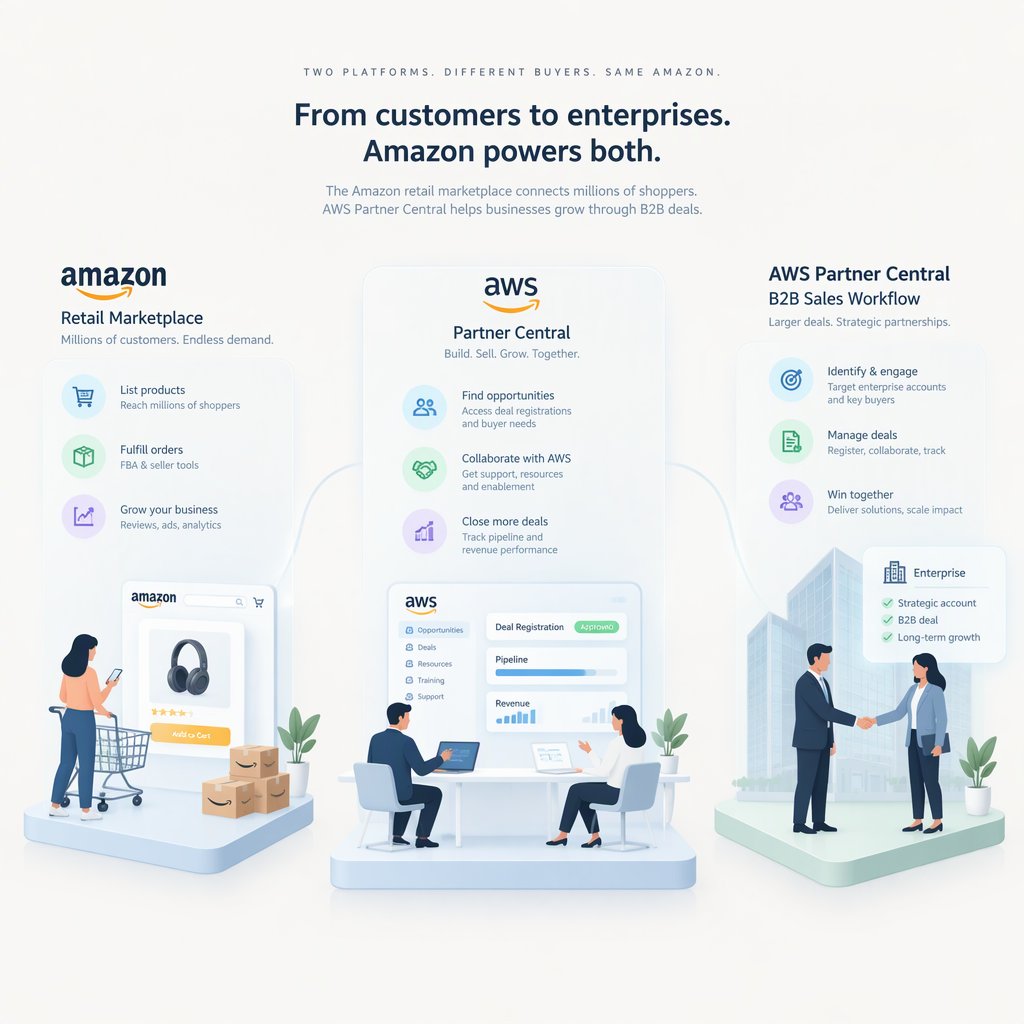
The distinction between Amazon's portals matters here. AWS Partner Central is where companies in the AWS Partner Network manage their relationship with AWS and work on activities such as co-selling, where AWS and a partner collaborate on a customer opportunity. Seller Central is where merchants run their third-party Amazon retail business. Vendor Central supports brands and distributors that sell wholesale to Amazon. Nothing in the summary indicates changes to retail search placement, seller account workflows, or vendor purchase orders.
Technical Deep Dive
Since the summary doesn't describe how the AI works, the useful technical question is where it could remove friction from partner sales. Take a software provider pitching demand forecasting to a brand that sells through both Seller Central and Vendor Central. Its sales team might have the account history in a customer relationship management system, integration notes in a support tool, and the scope of a proposed pilot in a separate document. Preparing a deal handoff means reconciling those records before anyone can act on them.
An AI-generated brief could save time by gathering approved facts and flagging gaps. It could also cost time if it mistakes a planned Vendor Central integration for a live one. In a sound implementation, the output would distinguish a verified field, such as an internal integration_status, from a generated recommendation, show which record supports the claim, and flag conflicting or stale data for review. That's an example of what partners should assess, not a description of a confirmed AWS feature.
Permissions are just as important as accuracy. A partner may be allowed to use a customer's inventory metrics for support without being allowed to share those metrics in a joint sales brief. If an AI workflow can pull from multiple accounts or systems, test whether access rules apply to both the records it retrieves and the output it generates. Check whether a reviewer can tell who approved an external handoff and which version went out.
A faster first draft only helps if it shortens the time to an approved, accurate handoff.
Industry Impact
The strategic signal is that AWS sees AI as useful inside its distribution channel, not just as something partners sell to customers. Joint selling takes coordination. If AWS and a partner need to clarify who owns a deal, what the buyer needs, and whether the proposed solution fits, incomplete records create another round of follow-up. Cutting that work would make co-selling easier to repeat, particularly for smaller partners without a dedicated sales operations team.
For sellers and vendors, the effect is indirect. An inventory planning provider might get a proposal in front of a large brand sooner, but that doesn't mean its software handles the brand's mix of wholesale and marketplace inventory. Buyers should still ask for a demonstration using their actual workflow. A vendor evaluating shortage reconciliation, for example, should ask how the product handles a partial receipt and a later adjustment, rather than judging it on how quickly the provider assembled a polished proposal.
There's a trade-off for AWS, too. If AI makes it easier to submit opportunities but doesn't make those opportunities more complete or better qualified, the volume goes up and the review burden moves downstream. More deal records aren't the same thing as more deals worth pursuing.
Implementation Considerations
If a relevant capability becomes available in your AWS Partner Central account, start with one sales workflow and one deal stage. Don't compare a repeat sale with a first-time enterprise deployment and credit the difference to AI. Use similar opportunities, document the baseline, and track what happens after the draft leaves the sales rep's screen.
- Measure the whole handoff. Track time from intake to approval, how often records come back for correction, and how much reviewer time each opportunity takes. At higher volume, watch the slowest cases, not just the average. They can tie up the people who approve deals.
- Count net savings. In an illustrative pilot, saving 15 minutes per opportunity across 40 opportunities frees up 10 hours. If extra verification takes six hours, the net gain is four hours before integration or training costs. That's a useful labor measure, but it's not evidence of a higher close rate.
- Limit the data in scope. Before connecting a CRM or reusing commerce records, verify permissions, retention terms, and approved uses. Keep buyer information and sensitive vendor terms out of the pilot unless those uses are explicitly approved.
- Keep a manual path. Confirm that someone can correct a mistaken account match, exclude a sensitive record, or complete the handoff without AI. Test those cases before expanding to more teams or deal types.
If you're a seller or vendor buying from an AWS partner, focus your pilot on operating results instead. Ask how long onboarding takes, what the integration does when a feed arrives late, and who investigates a mismatch between the tool's records and Amazon's. Those details say more about your likely return than the speed of the vendor's sales process.
Future Outlook
The longer-term test is whether AI improves decisions, not just documentation. Better-structured opportunity records could make it easier to match buyers with partners that have the right implementation experience. But poorly maintained account data could make those matches less reliable, and a system that favors well-documented deals could overlook capable firms with leaner sales teams. Neither outcome is established by the RSS summary.
Watch for AWS documentation that answers three practical questions: which workflows are covered, what data the tools can access, and which actions still require human approval. Evidence of shorter approval times or fewer returned submissions would tell partners more than a demo of a well-written deal summary. For buyers, the more meaningful signals are still implementation quality, support responsiveness, and fit.
Conclusion
AWS is bringing AI to Partner Central with a sales objective. The RSS summary establishes that much, but it doesn't show what partners can deploy or how much time they'll save. If you're an AWS partner, confirm availability, pick one measurable handoff, and count the review work before you scale. If you're buying commerce software for a Seller Central or Vendor Central operation, keep the bar where it belongs: the product has to solve the problem after the deal closes.